Last Updated on April 25, 2026
Table of Contents
The Well of Urð as a Source of Fate and Continuity
The Well of Urð, also written as Well of Urd or Urðarbrunnr, stands as a sacred spring where fate, memory, and continuity converge beneath the vast world tree. The name Urð comes from an Old Norse term pronounced roughly as “Oorth,” while Urðarbrunnr sounds like “OOR-thar-broonnr,” with a softly trilled ending. This well does not exist as a distant abstraction, since it actively gathers the outcomes of actions and binds them into a living current. Every moment that passes leaves a trace within its depths, shaping what follows without erasing what came before.
The Norns tend the well with deliberate care, and their presence ensures that events unfold through a balance of past influence and present action. Urð represents what has already occurred, Verðandi reflects what currently takes shape, and Skuld carries the weight of what must come into being. These figures do not impose rigid outcomes, since they respond to the flow of choices that accumulate within the well itself. Their work reveals how time moves as an interconnected process rather than a sequence of isolated moments.
The Well of Urð rests beneath one of the primary roots of Yggdrasil, drawing strength upward while also receiving nourishment from all that exists. Water from this source carries clarity and depth, reflecting more than surface appearances when one gazes into it. Those who approach encounter the layered consequences of countless lives, making the well a place of insight as well as power. Such a setting demands awareness, since nothing within it remains hidden or without consequence.
Names, Pronunciation, and Literary Presence
Alternate spellings such as Urd’s Well, Urth’s Well, and Urðarbrunnr all refer to the same enduring source tied to fate and continuity. Pronunciation varies slightly depending on familiarity with Old Norse sounds, though “Oorth” for Urð and “OOR-thar-broonnr” for Urðarbrunnr remain widely accepted guides. These names preserve linguistic elements that reflect how earlier speakers understood the connection between time, action, and consequence. Each variation retains a link to the same concept, even when modern spelling shifts its appearance.
Descriptions of the well appear in the Poetic Edda and the Prose Edda, where they emphasize its role in sustaining Yggdrasil and guiding the unfolding of events. These texts present the well as an active force that participates in shaping reality, rather than existing as a passive location. The Norns draw water daily and apply it to the roots of the tree, ensuring that decay does not overcome its structure. This action reinforces the idea that maintenance and creation operate together through continuous effort.
Gatherings of divine beings also occur near the well, highlighting its role as a place where decisions gain clarity and recognition. Participants meet not to impose arbitrary rulings, but to align outcomes with the accumulated weight of prior actions held within the well. This process reflects a form of order grounded in continuity rather than sudden change. The well therefore functions as both a source of life and a center of understanding.
Symbolism, Ritual Action, and Meaning
The Well of Urð carries symbolic depth through its association with water, reflection, and the preservation of memory across time. Water does not remain still within this setting, since it moves with purpose and carries the imprint of every action that enters it. This movement reflects how fate develops through interaction rather than remaining fixed from the outset. Each ripple within the well connects to a broader pattern that shapes existence at every level.
The act of tending the well demonstrates how care and responsibility sustain the structure of the worlds linked through Yggdrasil. The Norns do not act in isolation, since their work depends on the ongoing flow of events generated by both divine and human actions. Their daily efforts maintain balance, preventing decay while allowing growth to continue without disruption. This dynamic shows how stability requires continuous engagement rather than passive preservation.
Reflection within the well reveals truths that extend beyond immediate perception, encouraging those who approach to confront the deeper consequences of their choices. The surface may appear calm, yet it holds layers of meaning that connect past, present, and future into a unified whole. This quality transforms the well into a place of insight, where awareness deepens through direct encounter with reality. The Well of Urð therefore stands as both a sustaining force and a guide for understanding how actions shape existence.
Runes Connected to the Well of Urð
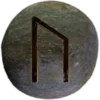
The rune Ūruz (ᚢ) aligns with the Well of Urð through its association with primal strength, endurance, and the force that drives life forward under pressure. Ūruz (ᚢ) represents the raw energy that supports growth, reflecting how the well nourishes the roots of Yggdrasil with sustaining power. This rune emphasizes resilience, showing how strength develops through interaction with challenge and resistance. Its connection to the well highlights the importance of foundational energy in maintaining continuity across time.
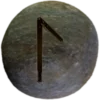
The rune Laguz (ᛚ) connects through its representation of water, flow, and intuitive movement guided by unseen currents. Laguz (ᛚ) reflects the living nature of the well, where water carries memory and directs the unfolding of events with subtle influence. Its meaning encourages awareness of deeper rhythms that shape outcomes beyond immediate control. Together, Ūruz (ᚢ) and Laguz (ᛚ) express a balance between strength and flow, mirroring how the Well of Urð sustains life while guiding the development of fate.
Importance of the Well of Urð to Asatruar
For Asatruar, the Well of Urð holds deep importance as a symbol of interconnected fate, personal responsibility, and the lasting impact of every action. It represents a living reminder that choices contribute to a broader pattern shaped by both individual effort and inherited conditions. This perspective encourages careful decision making, since nothing disappears once it enters the ongoing flow connected to the well. Each action adds to a shared continuum that extends beyond a single lifetime.
Practitioners view the well as a point of reflection where they consider how their actions align with values such as honor, reciprocity, and accountability. The presence of the Norns reinforces the idea that outcomes develop through interaction rather than fixed destiny imposed from outside forces. This understanding fosters a sense of agency grounded in awareness of consequences that unfold over time. The Well of Urð therefore serves as both a guide and a grounding symbol, linking present choices to an enduring stream of meaning.