Last Updated on April 14, 2026
Table of Contents
Odin the Seeker of Wisdom and Sovereign of Many Realms
The name Odin appears as Óðinn (pronounced OH-thin), Wōden in Old English, and Wotan in Germanic traditions, each variation reflecting regional language shifts while preserving a shared identity. He stands as a complex leader who values knowledge, strategy, and transformation, often pursuing wisdom through sacrifice and relentless curiosity that shapes his role among both gods and humans.
Odin rules from Asgard, pronounced AWS-gard, where the letter ð again carries that soft th sound, and the final r has a slightly rolled tone that gives the name a textured and deliberate finish. He governs not through simple authority, but through insight and foresight, constantly seeking deeper understanding of fate, language, and hidden forces that influence existence. His presence reflects a balance between intellect and power, since he values cunning and perception as much as strength and command within the realms he influences.
He often travels in disguise, moving through different lands while gathering knowledge from various beings, including giants, spirits, and humans who possess unique insights or experiences. These journeys highlight his restless nature, since he rarely remains confined to a single place or role for long. He sacrifices one of his eyes at Mímir’s well to gain profound wisdom, demonstrating a willingness to give up something essential in exchange for deeper understanding. This act defines his character, since it shows that he places knowledge above physical completeness or immediate comfort.
Symbols, Companions, and Pursuit of Knowledge
Odin surrounds himself with symbols and companions that reinforce his identity as a seeker and strategist who values observation and memory. His ravens, Huginn and Muninn, whose names mean thought and memory, travel across the world and return to share what they have seen and heard. These birds represent the extension of his awareness, allowing him to gather information from distant places without direct presence. His wolves, Geri and Freki, remain close to him, reflecting both loyalty and the primal forces that accompany his leadership.
He wields the spear Gungnir, which never misses its mark, symbolizing precision, intention, and the inevitability of outcomes once he commits to action. He also commands the hall Valhalla, where chosen warriors gather after death, preparing for future conflicts while living in a state of honor and recognition. This connection to warriors highlights his role in shaping both battle and destiny, since he selects those who continue their existence under his guidance. His influence therefore extends beyond life, weaving into the ongoing cycle of conflict and preparation that defines his domain.
In the Poetic Edda, especially in HávamálOdin speaks directly about wisdom, conduct, and the value of measured speech, offering guidance that reflects his own experiences and sacrifices. These verses present him as both a teacher and a participant in the struggles he describes, creating a voice that feels immediate and grounded. The Prose Edda, written by Snorri Sturluson, also presents detailed narratives about his actions, relationships, and role among the gods, giving structure to stories that circulate through oral tradition.
Transformation, Magic, and Influence
Odin practices seiðr pronounced SAY-thr, where the letter ð again produces that soft th sound, and the final r carries a subtle roll that completes the word with a distinct cadence. This form of magic allows him to shape perception, influence fate, and move between states of being in ways that challenge conventional boundaries. His use of such practices shows a willingness to cross lines that others avoid, reinforcing his identity as a figure who values results and understanding over rigid adherence to norms.
He also endures the ordeal of hanging on the world tree Yggdrasill for nine nights, wounded by his own spear, in order to gain knowledge of the runes and their deeper meanings. This act reflects extreme dedication, since he willingly undergoes suffering to unlock forms of power that connect language, symbols, and reality. The experience transforms him, granting insight that shapes both his actions and his influence over others. His story therefore centers on transformation, sacrifice, and the relentless pursuit of knowledge that defines his enduring presence.
Runes Associated with Odin
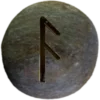
The rune Ansuz (ᚨ), pronounced AHN-sooz, connects strongly with Odin because it represents speech, divine inspiration, and the transmission of knowledge through words and symbols. This rune reflects his role as a communicator who values language as a tool for shaping reality and guiding others.
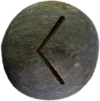
Another rune, Kenaz (ᚲ), pronounced KAY-nahz, symbolizes illumination, insight, and the spark of understanding that reveals hidden truths. This rune aligns with his constant pursuit of knowledge, since it represents the moment when confusion gives way to clarity through effort and perception.
The Importance of Odin to Asatruar
Among Asatruar, Odin holds deep importance as a figure who embodies the pursuit of wisdom, personal responsibility, and the willingness to face challenges in order to grow. Practitioners look to his actions as examples of how determination and sacrifice can lead to greater understanding and stronger character. His stories encourage individuals to value knowledge, honor their commitments, and remain aware of how their choices shape both present circumstances and future outcomes. Through rituals, study, and reflection, they engage with his legacy as a living influence that continues to inspire thoughtful action and deliberate speech.