Last Updated on April 25, 2026
Table of Contents
The Ravens Who Gather Thought and Memory
Huginn and Muninn serve as the ever watchful ravens of Odin in Norse mythology, carrying knowledge across the world and returning with insight that shapes divine awareness. The name Huginn, pronounced HOO-gin, relates to “thought,” while Muninn, pronounced MOO-nin, connects to “memory,” which reveals their complementary roles. You may also encounter alternate spellings such as Hugin and Munin, though the doubled consonants in the original Old Norse forms indicate a slightly stronger emphasis in pronunciation.
These ravens fly across Midgard each day, observing events among gods and humans and gathering information that Odin values greatly. Their flight represents an extension of Odin’s perception, since he relies on their reports to maintain awareness of distant happenings. This relationship transforms the birds into active participants in divine governance, rather than passive messengers who merely deliver information.
Their daily journeys highlight a balance between observation and recollection, since Huginn focuses on immediate thought while Muninn preserves what has occurred over time. This division of roles creates a dynamic system where knowledge evolves through both present awareness and stored experience. Through this pairing, the mythology expresses a sophisticated understanding of how perception and memory interact to form wisdom.
Accounts in Norse Literature
Poetic sources such as the Poetic Edda describe Huginn and Muninn as companions who depart at dawn and return at dusk, bringing news from all corners of the world. In one passage, Odin expresses concern that Huginn may not return, and he fears even more for Muninn, which underscores the value he places on both thought and memory. These lines provide insight into Odin’s character, revealing a reliance on mental faculties that extend beyond his own immediate perception.
The Prose Edda also references the ravens, emphasizing Huginn and Muninn’s role as informants who enable Odin to remain informed about events that unfold far from his throne. Snorri Sturluson presents them as essential components of Odin’s power, since knowledge allows him to act with foresight and precision. Their presence within these texts reinforces their importance within the broader mythological framework.
Descriptions often focus on their constant movement, which reflects the ongoing process of gathering and interpreting information. Their return each evening completes a cycle that mirrors the rhythm of day and night, connecting their activity to the passage of time. This pattern reinforces the idea that knowledge requires continuous effort, rather than a single moment of discovery.
Symbolism and Intellectual Meaning of Huginn and Muninn
Huginn and Muninn symbolize the dual processes that shape understanding, since thought allows immediate interpretation while memory preserves context and continuity. Their partnership demonstrates that neither function alone can produce complete insight, because each depends on the other to create a full picture. This interplay reflects a broader theme within Norse mythology, where balance between forces leads to stability and clarity.
Their raven forms carry associations with perception, intelligence, and the ability to navigate complex environments, which enhances their symbolic significance. Ravens often appear in myth as creatures that observe and adapt, making them fitting representatives of mental processes that require flexibility and awareness. These traits align closely with their role as gatherers of information across vast distances.
Interpretations frequently emphasize their connection to Odin’s pursuit of knowledge, since he values insight above many other forms of power. Their presence highlights the importance of observation and reflection in achieving understanding, rather than relying solely on strength or authority. Through Huginn and Muninn, the mythology presents a vision of intelligence that depends on both active engagement and careful remembrance.
Runes of Thought and Memory
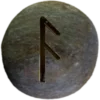
The rune Ansuz (ᚨ), pronounced AHN-sooz, aligns with Huginn and Muninn through its association with communication, inspiration, and the transmission of knowledge between realms. This rune represents the flow of ideas and the articulation of thought, which mirrors Huginn’s role in gathering and conveying immediate observations. Its meaning emphasizes clarity in expression, reinforcing the importance of accurate perception.
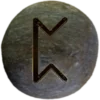
The rune Perthro (ᛈ), pronounced PER-throh, connects to deeper memory, hidden knowledge, and the unfolding of information over time, which reflects Muninn’s role in preserving and interpreting past events. This rune symbolizes the layers of meaning that emerge through reflection, highlighting the importance of memory in shaping understanding. Together, Ansuz (ᚨ) and Perthro (ᛈ) capture the balance between active thought and enduring memory embodied by Huginn and Muninn.
Meaning for Modern Asatruar
Huginn and Muninn hold meaningful significance for Asatruar, since they represent the integration of thought and memory as essential elements of wisdom and decision making. Many practitioners view these ravens as reminders that awareness requires both attention to the present and respect for past experience. Their daily journeys inspire reflection on how knowledge develops through consistent observation and careful recollection.
Their connection to Odin reinforces values of insight and intentional learning, encouraging individuals to seek understanding through active engagement with the world. Practitioners often interpret Huginn and Muninn as symbols of mental balance, where thought and memory work together to guide actions. Through these figures, they explore how perception and reflection shape meaningful paths within both personal and communal contexts.