Last Updated on April 24, 2026
Table of Contents

The Wolves of Odin and Their Mythic Role
Geri and Freki pronounced GEH-ree and FREH-kee stand as the loyal wolf companions of Odin pronounced OH-din, embodying hunger, loyalty, and the primal instincts that accompany divine wisdom within Norse mythology. Alternate spellings include Gere and Freke, which appear in later adaptations and translations that reflect linguistic variation across regions and time periods. Their names carry meaning, since Geri suggests the greedy one while Freki conveys the ravenous one, emphasizing their connection to appetite and survival.
These wolves remain constantly at Odin’s side, sharing his presence in Valhalla pronounced VAL-holl, where fallen warriors gather after death to prepare for the final battle of Ragnarök pronounced RAG-nah-rok. Odin himself consumes only wine, allowing Geri and Freki to eat the meat placed before him, which highlights their role as extensions of his will and appetite. This arrangement reinforces a symbolic relationship where the god’s restraint contrasts with the wolves’ unrestrained consumption.
Geri and Freki reflect the dual nature of Odin, who balances wisdom, war, and sacrifice while maintaining a connection to more primal and instinctive forces. Their presence illustrates how intelligence and ferocity coexist within the same figure, creating a complex portrayal of divine authority. Through this pairing, Norse mythology presents a vision of leadership that embraces both calculated thought and raw power.
Their Place in the Divine Court
Within Valhalla, Geri and Freki occupy a place of honor near Odin’s throne, where they accompany him as he oversees the Einherjar pronounced IN-hair-yar, the warriors who train for the final conflict. Their constant presence signals trust and unwavering loyalty, since they remain close to the god without challenge or hesitation. This relationship reflects a bond that extends beyond simple companionship into shared identity and purpose.
The wolves also symbolize the realities of war and survival, since wolves often appear in Norse culture as creatures that follow battlefields and feed on the fallen. Geri and Freki therefore connect Odin directly to the aftermath of conflict, reinforcing his role as a god of war and death. Their association with such imagery deepens the meaning of their presence, linking them to both victory and consequence.
Stories rarely focus on individual actions performed by Geri and Freki, yet their consistent inclusion alongside Odin ensures their importance within the broader mythological framework. Their silence within many narratives does not diminish their significance, since their symbolism communicates themes that words alone cannot fully express. This subtle presence allows them to represent enduring forces rather than isolated events.
Sources and Symbolic Interpretation
Geri and Freki appear in the Poetic Edda pronounced poh-EH-tik ED-da and the Prose Edda pronounced PROH-suh ED-da, where poets describe their companionship with Odin and their role within Valhalla. These texts provide brief but meaningful references that establish their identity and emphasize their connection to the chief god. Despite limited narrative detail, their repeated mention confirms their importance within Norse cosmology.
Their symbolism extends beyond physical presence, since they represent the instinctive drives that exist alongside wisdom and authority. Geri and Freki embody hunger not only for food but also for experience, conquest, and survival within a harsh and unpredictable world. This interpretation aligns with broader themes in Norse mythology, where strength and awareness must coexist to ensure success.
Through their association with Odin, Geri and Freki contribute to a portrayal of divinity that embraces complexity and contradiction. Their role highlights the necessity of balancing intellect with instinct, creating a unified vision of power that draws from multiple sources. This enduring image continues to influence interpretations of Norse myth and its symbolic depth.
Runes Reflecting the Nature of Geri and Freki
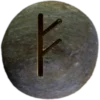
The rune Ūruz (ᚢ) pronounced OO-rooz aligns with Geri and Freki through its association with primal strength, endurance, and untamed energy that defines the nature of wild beasts. This rune captures the raw vitality that wolves represent, emphasizing their physical power and their role within the natural order. Geri and Freki embody this force as they remain ever-present symbols of instinct and resilience.
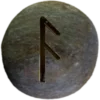
The rune Ansuz (ᚨ) pronounced AHN-sooz connects with Geri and Freki through its link to divine communication, inspiration, and the presence of Odin as a source of wisdom and authority. This rune reflects the relationship between the wolves and their master, highlighting how they serve as extensions of his identity and influence. Together, these runes illustrate the balance between instinct and intellect that defines their role.
The Importance of Geri and Freki to Asatruar
Geri and Freki hold meaning for Asatruar as representations of loyalty, instinct, and the acceptance of natural drives within a balanced and thoughtful life. Their connection to Odin encourages reflection on how strength and wisdom can coexist without conflict. This perspective supports a view of personal growth that values both awareness and authenticity.
Their presence also reminds practitioners of the importance of respecting the cycles of life and death, since wolves often symbolize survival within harsh conditions. Many Asatruar interpret Geri and Freki as guides for understanding the relationship between necessity and choice. They represent enduring companions who embody both the challenges and strengths found within human experience.