Last Updated on April 23, 2026
Table of Contents
Skeggöld and the Age of Axes and Conflict
Skeggöld, sometimes spelled Skeggold or Skeggǫld, stands as a powerful figure whose name connects directly with violence, upheaval, and the imagery of axes raised in battle. Her name translates closely to “axe age,” which reflects a time defined by strife, broken bonds, and relentless conflict among warriors. This association places her within a symbolic framework where she represents not only a Valkyrie but also an era shaped by aggression and instability. Through this identity, she embodies both a being and a condition that influences the course of events.
The pronunciation of Skeggöld can challenge modern readers due to the presence of the letter ö and the consonant cluster at the beginning of the word. You can pronounce Skeggöld as “SKEG-guld,” where the first syllable carries a hard consonant sound and the second includes a rounded vowel similar to “u” in “full.” The alternate spelling Skeggǫld uses the letter ǫ, pronounced like “aw” in “law,” which gives the second syllable a deeper tone. These variations preserve the original phonetic qualities while offering accessible ways to speak the name.
Descriptions often emphasize her connection with periods of intense conflict, where social order breaks down and violence becomes a dominant force within society. Valkyries influence battles by selecting the fallen and guiding outcomes, yet Skeggöld extends this role by representing the broader atmosphere of war itself. Her presence signals a time when axes define both combat and cultural expression, shaping identity through struggle. This connection links her directly with the experience of widespread turmoil rather than isolated encounters.
References within Old Norse literature mention Skeggöld in contexts that describe catastrophic periods leading toward destruction and transformation. These mentions often place her within a sequence of events that signal the approach of profound change across the world. Though details about her individual actions remain limited, her inclusion within these narratives confirms her symbolic importance. Through these references, she becomes associated with moments that reshape existence on a large scale.
Symbolic Meaning and Cultural Interpretation
Skeggöld represents the concept of an age defined by conflict, where tension and aggression influence every aspect of life and decision making. This interpretation allows her to function as a symbol of collective experience rather than a single actor within a story. By embodying an era, she highlights how cultural conditions shape individual behavior and outcomes. This perspective broadens her role beyond the battlefield and into the structure of society itself.
Her connection with axes reinforces this identity, since these weapons serve as both tools and instruments of war within Norse culture. The axe carries symbolic weight that reflects strength, survival, and the ability to confront challenges directly. Skeggöld’s association with this imagery emphasizes the raw and immediate nature of conflict during the periods she represents. This connection deepens her identity as a figure tied to physical action and decisive force.
Artistic portrayals often depict Skeggöld surrounded by imagery of broken shields, raised weapons, and chaotic movement across battlefields. These elements capture the intensity and disorder that define her presence within mythological interpretation. By focusing on these visual themes, artists emphasize the atmosphere of conflict that surrounds her identity. This approach reinforces her role as a representation of strife rather than a participant in isolated events.
Runes Reflecting Conflict and Strength
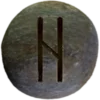
The rune Hagalaz (ᚺ) aligns with Skeggöld because it represents disruption, sudden change, and forces that break existing structures to create new conditions. This rune reflects the destructive aspect of transformation, which matches her association with periods of upheaval and conflict. Hagalaz (ᚺ) highlights the role of chaos in shaping future outcomes. Skeggöld embodies this principle by representing an era where destruction drives change.
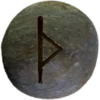
The rune Thurisaz (ᚦ) also connects with Skeggöld through its association with raw power, conflict, and the force required to confront opposition directly. This rune emphasizes both danger and protection, reflecting the dual nature of strength within challenging situations. She mirrors this energy by embodying the intensity of battle and the need to face adversity with resolve. Together, Thurisaz (ᚦ) and Skeggöld symbolize the power found within struggle.
Importance of Skeggöld for Asatruar
Skeggöld holds significance for Asatruar who explore how mythological figures represent broader conditions that influence human experience and cultural development. Her association with an age of conflict provides insight into how societies respond to periods of instability and challenge. By examining her role, practitioners can reflect on how external conditions shape behavior and decision making. This connection allows her to serve as a symbol of collective experience.
Many Asatruar interpret Skeggöld as a reminder that periods of difficulty can lead to transformation and growth when approached with awareness and strength. Her presence highlights the importance of resilience and the ability to navigate challenging circumstances without losing direction. This perspective transforms her image into a guide for understanding conflict as part of a larger process. She continues to influence modern interpretation of mythological themes.