Last Updated on April 18, 2026
Table of Contents
Exploring New Lands was in Their Blood
Viking and Norse explorers journeyed far beyond their homeland, making a significant impact on history. Among them, Leif Erikson (pronounced, LAYF EHR-ik-suhn), son of Erik the Red, stands out. Leif explored parts of North America around 1000 CE, calling it “Vinland.” Another famous explorer, Erik the Red, established Greenland’s first Norse settlements. Erik expanded Norse territories beyond Iceland.
Björn Ironside (BYORN IRON-side), one of Ragnar Lodbrok’s sons, explored and raided throughout the Mediterranean Sea. His journeys led him as far as Italy, where he made an unforgettable impact. Bjorn’s strength and determination demonstrate the ambitious spirit of Norse explorers, who often faced unknown dangers without hesitation.
Freydís Eiríksdóttir (FRAY-dees AY-riks-doh-teer) was Erik the Red’s daughter and Leif Erikson’s sister. She inherited his adventurous spirit and bold leadership. Freydís joined expeditions to Vinland, carving her place in history through bravery and defiance.
Gudrid Thorbjarnardóttir (GOO-drid THOR-byar-nahr-dot-teer) deserves mention as a pioneering woman in exploration. She journeyed to North America with her husband, Thorstein Erikson. Gudrid traveled as far as Rome, meeting the Pope, which marked her as a remarkable figure among Norse explorers. Her resilience and adaptability show the important role of women in Norse exploration.
Harald Hardrada (HAR-ald har-DRAH-duh), known for his daring life, traveled from Norway to the Byzantine Empire and beyond. Harald fought as a mercenary in the Byzantine army before claiming the Norwegian throne. His extensive travels and battle experiences made him one of the most famous Norse kings.
The Vikings’ exploratory spirit took them across continents, seeking new lands, resources, and opportunities. Their voyages expanded their cultural influence and left a lasting mark on the places they visited. From Vinland to Byzantium, these Norse explorers reshaped the world, blending their culture with those they encountered. Their determination, curiosity, and resilience still inspire today.
Norse Explorers and the Asatru Worldview
Norse Explorers represent a powerful example of curiosity, resilience, and purposeful movement, qualities that continue to inspire Asatruar who seek meaningful engagement with both the physical world and spiritual understanding. These explorers did not simply travel for conquest or wealth, since they pursued knowledge, trade, and connection across vast and often dangerous landscapes.
Asatru practitioners often view Norse Explorers as embodiments of values that extend beyond physical travel into personal growth and spiritual exploration. These individuals navigated unfamiliar territories, faced unpredictable conditions, and relied on their abilities to survive and succeed in environments that demanded constant awareness. Their legacy encourages modern followers to approach life with curiosity, determination, and a willingness to step beyond comfort in pursuit of deeper understanding.
Navigation, Skill, and Cultural Exchange
Norse Explorers relied on advanced navigation techniques, environmental awareness, and practical skills that allowed them to travel across oceans and establish connections with distant lands. They observed stars, studied currents, and interpreted weather patterns, which required patience and careful attention to detail rather than impulsive decision making. These practices reflect a mindset that values preparation and knowledge, qualities that align closely with Asatru principles of responsibility and awareness.
Old Norse terminology often appears in discussions of exploration, including the word víkingr, pronounced VEE-kingr, where the accented í produces an ee sound and the final r is lightly rolled or softened. This term originally referred to individuals who participated in expeditions, rather than serving as a general label for all Norse people, which highlights the importance of context in language. Another term, knarr, pronounced knahr, describes a type of trading ship that supported long distance travel and exchange.
Cultural exchange played a significant role in these journeys, as Norse Explorers interacted with various communities, shared goods, and influenced regions through both cooperation and conflict. These interactions shaped economic networks and introduced new ideas, demonstrating how exploration contributed to broader social development. Asatruar often reflect on these exchanges as examples of how engagement with others can lead to growth and expanded perspective.
Spiritual Meaning and Lasting Influence
Norse Explorers also hold symbolic meaning within Asatru, representing the journey of the self through challenges, discovery, and transformation that shape personal identity and understanding. Their voyages mirror the internal process of seeking wisdom, confronting uncertainty, and developing strength through experience. This symbolism encourages practitioners to view life as an ongoing journey that requires both courage and thoughtful direction.
Some Icelandic words associated with exploration include ferð, pronounced fyerth, meaning journey, where the letter ð, called eth, produces a soft th sound similar to the word this. Another term, heimr, pronounced haym-r, refers to world or home, emphasizing the connection between travel and belonging within a larger context. These linguistic elements reinforce how language carries cultural meaning that deepens engagement with tradition.
Modern Asatruar draw inspiration from Norse Explorers by applying their values to contemporary life, whether through travel, learning, or personal development that requires stepping into unfamiliar situations. This influence supports a mindset that embraces growth while maintaining respect for heritage and tradition. Norse Explorers therefore remain relevant as both historical figures and enduring symbols of purposeful movement and discovery.
Runes Linked to Norse Explorers
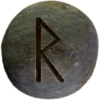
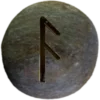
The Elder Futhark rune Raido (ᚱ), pronounced RYE-thoh, connects strongly with Norse Explorers because it represents travel, rhythm, and the structured movement that guides successful journeys across land and sea. This rune emphasizes direction, planning, and the importance of following a path with intention, which reflects the careful navigation practiced by those who explored distant regions. Another rune, Ansuz (ᚨ), pronounced AHN-sooz, relates to communication, insight, and divine inspiration, which supported explorers as they interpreted signs and shared knowledge.
Raido (ᚱ) highlights physical movement and purposeful travel, while Ansuz (ᚨ) focuses on awareness and understanding that guide decision making during uncertain situations. Practitioners may use these runes in reflection or ritual to connect with the spirit of exploration and the pursuit of knowledge. Together, they represent both the external journey across landscapes and the internal process of learning and growth.
The Importance of Norse Explorers to Asatruar
Norse Explorers hold deep importance for Asatruar because they provide historical and symbolic examples of how individuals can pursue knowledge, face challenges, and expand their understanding of the world. Their actions demonstrate the value of courage, preparation, and adaptability, which remain essential qualities within modern practice. These examples encourage practitioners to approach life with curiosity and determination.
The legacy of exploration also reinforces the idea that growth requires movement beyond familiar boundaries, whether physical, intellectual, or spiritual in nature. Asatruar often draw inspiration from these journeys when making decisions that involve risk, change, or new opportunities. Norse Explorers therefore continue to influence how individuals engage with the world, shaping both personal development and collective identity.