Last Updated on April 14, 2026
Table of Contents
Mjölnir: The Hammer of Thunder and Protection
Mjölnir, also spelled Mjölnir or Mjǫllnir, stands as the powerful hammer wielded by Thor and serves as a symbol of strength, protection, and decisive action. The name Mjölnir comes from Old Norse and is pronounced MYOL-neer, where the letter “ö” sounds similar to the “i” in “bird,” and the “j” carries a “y” sound. In the alternate spelling Mjǫllnir, the character “ǫ” appears, and it is pronounced like a short “o” in “off,” which gives the name a slightly heavier tone.
This weapon represents more than physical force, as it embodies the ability to defend order and respond to threats with clarity and precision. Mjölnir returns to Thor’s hand after being thrown, reinforcing the idea of reliability and control in the face of chaos. The hammer also connects with lightning and thunder, expressing energy that moves quickly and strikes with purpose.
Creation and Unique Qualities
Mjölnir comes into existence through the work of skilled dwarven smiths, who forge it with exceptional craftsmanship and imbue it with remarkable properties that set it apart from ordinary weapons. The process of its creation highlights the importance of skill, attention, and the ability to shape raw materials into something powerful and enduring. Despite a shortened handle, which results from an interruption during its forging, it functions with unmatched effectiveness.
The hammer carries the ability to strike with immense force while maintaining balance and precision, allowing Thor to confront powerful opponents without losing control. Its returning motion ensures that it remains a constant presence, reinforcing the idea that strength must stay accessible and dependable. These qualities make Mjölnir an extension of Thor’s will and a reflection of his role as a defender.
Mjölnir also plays a role in rituals and ceremonies, where it serves as a tool for blessing, protection, and the marking of important events. This use extends its meaning beyond combat, as it becomes a symbol of continuity and stability within communal life. The hammer bridges the gap between force and care, demonstrating that power can support both defense and preservation.
Mentions in Early Texts
It appears frequently in the Prose Edda, particularly in Gylfaginning and Skáldskaparmál, where it features in stories that highlight Thor’s encounters with powerful adversaries and the importance of his weapon. These accounts describe how Mjölnir helps maintain balance by confronting forces that threaten stability. The narratives emphasize both its destructive capability and its protective role.
The Poetic Edda includes references to it in poems such as Þrymskviða, where Thor retrieves his stolen hammer from the giant Þrymr, whose name is pronounced THRIMR with the letter “Þ” sounding like “th” in “thin.” This story illustrates the significance of Mjölnir as an essential tool that cannot remain absent without consequence. Through these texts, Mjölnir gains recognition as a central element in maintaining order.
Runes Connected to Mjölnir
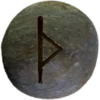
The Elder Futhark rune Thurisaz (ᚦ) aligns closely with Mjölnir, as it represents force, protection, and the power to confront opposition with strength and determination. Pronounced THOO-ree-sahz, with the “th” like in “thorn,” this rune reflects the direct and impactful nature of the hammer when used against threats. Its symbolism connects with the active defense that it provides.
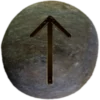
Another rune associated with Mjölnir is Tiwaz (ᛏ), which represents honor, courage, and the disciplined application of strength in pursuit of justice and stability. Pronounced TEE-wahz, this rune emphasizes the responsibility that comes with power and the need for clear intention when acting. Together, Thurisaz (ᚦ) and Tiwaz (ᛏ) express the protective and purposeful qualities that define it.
Mjölnir and Its Importance to Asatruar
Mjölnir holds strong importance for Asatruar because it represents protection, strength, and the responsibility to defend both Community and personal values against challenges. Practitioners often use the symbol of the hammer as a reminder of the need to act with clarity and purpose when facing difficulties. This connection encourages a balance between القوة and restraint in daily life.
The hammer also serves as a symbol of blessing and continuity, reinforcing the importance of maintaining stability and honoring traditions that support communal well being. Asatruar may reflect on Mjölnir when seeking protection, guidance, or the strength to uphold commitments and responsibilities. Through this perspective, it becomes a powerful and enduring symbol of action, defense, and integrity.