Last Updated on April 23, 2026
Table of Contents
Göndul and the Shaping of Vision in Battle
Göndul, sometimes spelled Gondul or Gǫndul, stands among the Valkyries who influence conflict through perception, insight, and decisive awareness during crucial moments. Her name connects with ideas of magic, enchantment, and possibly the act of wielding a staff or wand, which suggests a link with ritual power and altered states of consciousness. This association places her in a unique position where she shapes not only outcomes but also the way events appear to those involved. She represents the power of vision within the chaos of warfare.
The pronunciation of Göndul can challenge modern readers due to the presence of the letter ö and its Old Norse origins. You can pronounce it as “GURN-dool,” where the first vowel sounds like the “u” in “burn,” and the second syllable flows smoothly with a rounded tone. The alternate spelling Gǫndul uses the letter ǫ, pronounced like “aw” in “law,” which creates a deeper and more open sound when spoken. These variations reflect historical linguistic forms while maintaining the same identity across texts.
Descriptions of Göndul often emphasize her role in influencing how warriors perceive the battlefield, which can alter their actions and decisions in subtle yet powerful ways. Valkyries do not simply select the fallen, since they also guide the unfolding of events through unseen influence and presence. She embodies this guiding force by shaping awareness, which can determine whether a warrior acts with confidence or hesitation. This connection between perception and outcome highlights the importance of insight in moments of conflict.
References within Old Norse literature mention Göndul in lists of valkyries and occasionally within poetic narratives that describe their activities. These appearances, though brief, confirm her place within the structured system of beings who govern aspects of battle and fate. Her inclusion among recognized valkyries signals that her role carried significance within the mythological framework. Through these mentions, She maintains a lasting presence within the tradition.
Symbolism and Interpretive Role
Göndul represents the power of perception, where the way individuals interpret events can shape their responses and ultimately influence outcomes. This symbolic role extends beyond literal battle and applies to any situation where clarity and awareness determine success or failure. By embodying this concept, Göndul highlights the importance of understanding and insight in navigating complex challenges. Her presence reminds observers that perception often directs action as strongly as physical force.
Her connection with enchantment and magical influence suggests that she operates within both physical and mental realms, bridging the gap between action and thought. This dual role allows her to shape experiences on multiple levels, influencing not only what happens but also how it feels and appears. Göndul becomes a figure who governs the intersection of reality and interpretation. This perspective adds depth to her identity within Norse mythological understanding.
Artistic portrayals frequently depict Göndul with elements that emphasize vision, such as glowing eyes, flowing garments, or objects associated with ritual practice. These images highlight her connection with awareness and transformation, capturing the essence of her influence over perception. By focusing on these features, artists convey her role as a guide who shapes how events unfold in the minds of those involved. This visual representation reinforces her identity as a visionary figure.
Runes Reflecting Insight and Awareness
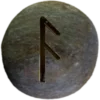
The rune Ansuz (ᚨ) aligns closely with Göndul because it represents communication, inspiration, and the transmission of knowledge across different levels of understanding. This rune reflects the ability to perceive and convey meaning, which matches her influence over awareness and interpretation. Ansuz (ᚨ) highlights the role of insight in guiding action and shaping outcomes. Göndul embodies this principle by directing perception in moments of uncertainty.
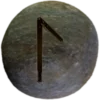
The rune Laguz (ᛚ) also connects with Göndul through its association with intuition, flow, and the movement of inner awareness beneath the surface of conscious thought. This rune emphasizes the importance of trusting deeper understanding when navigating complex situations. She reflects this quality by influencing perception in ways that may not always appear obvious yet remain deeply effective. Together, Laguz (ᛚ) and Göndul symbolize the power of intuitive vision.
Meaning of Göndul for Asatruar
Göndul holds importance for Asatruar who seek to understand how perception and awareness influence both action and outcome within a spiritual framework. Her role highlights the idea that clarity of thought and insight can shape experiences as strongly as physical effort. By examining her influence, practitioners can reflect on how interpretation affects decision making and personal growth. This connection allows her to serve as a symbol of mindful awareness.
Many Asatruar interpret Göndul as a reminder that understanding and perspective play essential roles in navigating challenges and pursuing meaningful goals. Her association with vision encourages individuals to develop insight and remain attentive to subtle influences that guide their path. This perspective transforms her image into a guide for thoughtful engagement with both inner and outer experiences. Göndul continues to inspire reflection within modern practice.