Last Updated on June 14, 2026
Table of Contents
The Identity and Legacy of Hraesvelgr
Hraesvelgr appears as a powerful giant who takes the form of an enormous eagle in Norse mythology. Scholars also spell the name as Hræsvelgr or Hraesvelg, while the Old Norse form Hræsvelgr sounds roughly like HRAHSS vell gr, with the first element carrying a broad vowel similar to the word frost. Many translations explain the name as corpse swallower or one who devours the slain, which reflects the fearsome nature connected with the figure. Ancient storytellers presented Hraesvelgr as a cosmic being whose movements shaped the natural world through immense strength rather than ordinary action.
Traditional accounts describe the eagle sitting at the edge of heaven, where every flap of the giant wings creates the winds that sweep across the lands below. This vivid explanation offered listeners a memorable answer for changing weather while reinforcing the belief that mighty supernatural beings influenced everyday life. The image combines natural observation with poetic imagination and highlights the Norse tendency to connect visible events with legendary creatures whose actions reached beyond human understanding.
People sometimes associate Hraesvelgr with Valhalla because of the eagle imagery found throughout Norse tradition, yet surviving medieval sources place the giant at the end of heaven rather than as a direct guardian of the famous hall. Modern discussions occasionally repeat the description of an eagle guarding Valhalla, although the older texts emphasize the creation of wind instead of a protective role over the hall of the honored dead. Readers therefore benefit from separating later interpretations from the details preserved in early literary records.
Pronunciation, Symbolism, and Literary Context
The pronunciation of Hræsvelgr deserves special attention because the ligature æ sounds approximately like the vowel in the English word cat, making Hræsvelgr resemble HRAHSS vel gr when spoken slowly. Writers who avoid the ligature often prefer Hraesvelgr because that spelling remains easier for modern keyboards and publications. Careful pronunciation helps preserve the linguistic character of the original language while allowing broader audiences to discuss the figure with confidence.
The giant eagle symbolizes overwhelming natural force instead of moral judgment or personal destiny. Winds arrive because the creature moves, creating an elegant mythic explanation that links visible weather with invisible power. This connection reflects a worldview where landscapes, skies, and seasons remained closely tied to beings whose scale exceeded ordinary human experience.
Hraesvelgr receives a brief but memorable mention in the poetic material preserved within the Poetic Edda, where the verses explain that the beating wings produce the winds experienced throughout the world. The surviving description remains concise, yet it inspired centuries of discussion among historians, linguists, artists, and readers who seek insight into Norse cosmology. The limited appearance also demonstrates that even short passages can shape lasting traditions when vivid imagery captures the imagination.
Cultural Meaning and Enduring Interest
Modern audiences continue to study Hraesvelgr because the figure blends dramatic symbolism with ancient attempts to explain the environment through narrative. Artists frequently portray a colossal eagle perched against the horizon, while writers use the image to evoke mystery, power, and the untamed character of the northern skies. Such creative interpretations keep the legend active without replacing the sparse descriptions preserved in medieval literature.
The enduring fascination surrounding Hraesvelgr also stems from the contrast between silence and grandeur within the historical sources. A relatively small number of surviving references produced a remarkably influential image that continues to appear in books, games, and visual art inspired by Norse mythology. That lasting appeal demonstrates how concise mythic ideas can travel across generations and remain meaningful within changing cultural settings.
Researchers often compare the giant eagle with other world myths involving birds that influence weather or connect heaven with earth, although each tradition develops its own symbolic purpose. The Norse account remains distinctive because it presents the movement of immense wings as the direct cause of earthly wind, creating a vivid relationship between cosmic action and daily experience. This imaginative explanation reflects the storytelling traditions that transformed natural observation into memorable mythological narrative.
Elder Futhark Runes Commonly Associated with Hraesvelgr
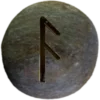
Many modern interpreters associate Ansuz (ᚨ) and Raido (ᚱ) with Hraesvelgr, although no historical source directly links those runes with the giant eagle. Ansuz (ᚨ), pronounced AHN sooz, often represents communication, inspiration, and higher wisdom within studies of the Elder Futhark. Its connection with the winds encourages symbolic comparisons because moving air frequently carries messages and invisible influence across great distances.
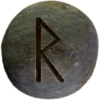
Raido (ᚱ), pronounced RYE though, commonly relates to travel, ordered movement, and purposeful journeys. Students of mythology sometimes connect it with Hraesvelgr because the endless circulation of wind suggests constant motion that reaches every corner of the world. These associations reflect modern symbolic interpretation instead of explicit medieval evidence, yet they provide thoughtful ways to explore themes of movement, sky, and unseen power within Norse inspired studies.
The Importance of Hraesvelgr to Asatruar
Many Asatruar value Hraesvelgr as a reminder that nature operates through forces deserving respect, attention, and thoughtful reflection. The giant eagle encourages contemplation about the relationship between humanity and the wider cosmos while reinforcing appreciation for ancient stories that explain natural events through memorable symbolism. Practitioners often view the figure as an example of the vast scale present within Norse mythological traditions rather than as a central object of devotion.
Some Asatruar also appreciate Hraesvelgr because the legend highlights balance between observation and imagination, allowing weather, landscape, and mythology to interact within meaningful cultural narratives. The image of a colossal eagle generating the winds inspires meditation on change, endurance, and the continuing presence of powerful Natural Cycles. Interest therefore rests more upon symbolic significance and respect for inherited tradition than upon frequent ritual focus or exclusive theological emphasis.