Last Updated on June 6, 2026
Table of Contents
History and Significance of Kylver Stone
Kylver Stone ranks among the most important runic artifacts ever discovered because it preserves one of the earliest known complete sequences of the Elder Futhark alphabet. The name Kylver is usually pronounced “KILL ver,” while Kylver Stone sounds like “KILL ver Stone.” Scholars sometimes refer to the artifact as the Kylver Runestone or the Kylver Inscription, although Kylver Stone remains the most widely recognized English name.
Archaeologists discovered Kylver Stone in Gotland, Sweden, during the nineteenth century while examining an ancient burial site. The artifact originally served as part of a stone cist grave, where builders placed it as a covering slab. Its location within a burial context has encouraged extensive discussion regarding its purpose, meaning, and cultural significance.
The inscription dates to the Migration Period, generally around the fifth century. This era witnessed substantial cultural change across northern Europe as communities adapted to shifting political conditions, regional movements, and evolving social structures. Kylver Stone provides a valuable glimpse into the written traditions that existed during this formative period.
The artifact attracts special attention because it contains a nearly complete Elder Futhark sequence. Elder Futhark represents the oldest known runic alphabet used by Germanic peoples. Researchers value the inscription because it offers direct evidence for the order and arrangement of runes during an early stage of runic development.
Unlike many later runestones that commemorate individuals or describe specific events, Kylver Stone focuses primarily on the runic sequence itself. This feature distinguishes it from numerous Scandinavian inscriptions and gives scholars an important reference point when studying the history of writing systems. The arrangement of characters allows experts to compare regional traditions and trace the evolution of runic literacy across centuries.
Runic Content and Archaeological Importance
The most famous element of Kylver Stone consists of the Elder Futhark sequence carved across its surface. The inscription presents the runes in an organized order that closely resembles the sequence recognized by modern researchers. Because the artifact preserves this arrangement so clearly, it has become a key source for understanding the early runic alphabet.
Several scholars believe the inscription carried symbolic meaning beyond simple writing practice. Some researchers suggest that the orderly presentation of the runes reflected ritual concepts, protective intentions, or expressions of specialized knowledge. Although no universal agreement exists regarding the exact purpose, the unusual nature of the inscription continues to inspire scholarly investigation.
The stone also contains additional markings that have generated considerable interest. Certain carved elements appear distinct from the main alphabetic sequence and may represent magical formulas, symbolic devices, or personal additions created by the carver. These details contribute to ongoing debates regarding how ancient communities understood and employed runic writing.
Kylver Stone demonstrates that runes served functions extending beyond practical communication. The inscription suggests that literacy, symbolism, and cultural identity often intersected within early Germanic societies. Such evidence helps historians build a richer understanding of how people interacted with written language during the Migration Period.
Legacy and Modern Influence
Kylver Stone continues to influence modern studies of runology, archaeology, linguistics, and early northern European history. Its preservation allows researchers to examine a direct example of ancient runic practice rather than relying solely upon later manuscript traditions. This connection to an early stage of writing gives the artifact exceptional scholarly value.
Many books, academic articles, and educational resources feature Kylver Stone when introducing the Elder Futhark alphabet. Students frequently encounter the inscription because it illustrates the traditional sequence of runes with unusual clarity. The artifact therefore serves as both a historical object and an educational tool.
The discovery also strengthened interest in Gotland’s archaeological heritage. Gotland contains numerous remains from different historical periods, and Kylver Stone stands among its most celebrated finds. Visitors and researchers often view the artifact as a gateway to understanding broader aspects of Scandinavian cultural development.
Modern audiences appreciate Kylver Stone because it bridges distant centuries through a tangible record of ancient writing. The inscription reveals how people organized symbols, preserved knowledge, and expressed ideas during a period that left relatively few written records. Through its remarkable runic sequence and enduring historical importance, Kylver Stone remains one of the most influential artifacts connected to the study of the Elder Futhark and early Germanic literacy.
Two Elder Futhark Runes Associated with Kylver Stone
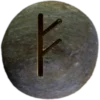
Fehu (ᚠ), pronounced “FAY hoo,” stands among the most important runes associated with Kylver Stone because it appears at the beginning of the Elder Futhark sequence preserved on the artifact. The rune traditionally represents wealth, resources, prosperity, and the movement of valuable possessions within a Community. Its position at the start of the alphabet makes it a natural symbol of beginnings, organization, and the structure of runic knowledge. Since Kylver Stone preserves one of the earliest complete rune sequences, Fehu (ᚠ) holds special relevance when discussing the inscription.
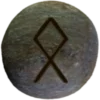
Othila (ᛟ), pronounced “OH thah lah,” also connects strongly with Kylver Stone through themes of heritage, inheritance, and ancestral identity. The rune often symbolizes cultural continuity and the transmission of traditions across generations. Kylver Stone serves a similar role by preserving an ancient writing system that later scholars could study and understand. Together, Fehu (ᚠ) and Othila (ᛟ) reflect both the beginning of runic learning and the preservation of ancestral knowledge.
The Importance of Kylver Stone to Asatruar
Many Asatruar regard Kylver Stone as an important historical artifact because it preserves one of the earliest known presentations of the Elder Futhark rune row. The inscription offers a direct connection to ancient Germanic traditions and provides valuable evidence regarding how runes appeared during an early period of northern European history. This authenticity gives the artifact considerable significance within modern Heathen communities.
Kylver Stone also serves as a symbol of continuity between past and present. Practitioners often value historical sources that help illuminate older customs, language, and symbolic systems. The preserved rune sequence contributes to a deeper understanding of traditional runic knowledge and its cultural context.
Many people within the Asatru community appreciate Kylver Stone because it represents a rare and tangible link to ancestral heritage. Its enduring presence encourages study, reflection, and respect for the historical foundations that continue to influence modern expressions of Norse spirituality and culture.