Last Updated on May 15, 2026
Table of Contents
The History and Meaning of Old English Rune Poem
The Old English Rune Poem stands among the most valuable surviving literary works connected to early Germanic writing traditions and Anglo Saxon spiritual culture. Scholars usually date the composition to somewhere between the eighth and tenth centuries, although the surviving manuscript appeared much later during the medieval period. The poem preserves descriptions of runes used within the Anglo Saxon futhorc system, which expanded from the earlier Elder Futhark alphabet through cultural contact and regional development.
People pronounce Old English as “ohld ING-glish,” while Rune Poem sounds like “roon POH-uhm.” The term futhorc comes from the first six rune names and sounds like “FOO-thork.” Several writers also refer to the text as the Anglo Saxon Rune Poem or the Rune Poem of Anglo Saxon England. Each verse within the composition explains a rune through symbolic imagery, moral reflection, and references to everyday life experienced within early northern European communities.
The poem originally contained stanzas devoted to individual runes, with every section presenting symbolic associations connected to wealth, travel, nature, kinship, or spiritual ideas. Christian influence shaped parts of the language, yet the work still preserves numerous themes inherited from pre Christian Germanic traditions. Historians value the poem because it bridges linguistic scholarship, mythology, oral storytelling, and the evolution of written communication throughout medieval England.
Pronunciation often challenges modern readers because many Old English and Old Norse related words contain unfamiliar letters and sounds. The letter æ appears in several Germanic texts and sounds like the “a” in “cat.” The letter þ, called thorn and pronounced “thorn,” produces the same sound as the “th” heard in “think.” The letter ð, known as eth and pronounced “eth,” usually creates the softer “th” sound heard in “this.”
The Survival and Rediscovery of the Poem
The original manuscript containing the Old English Rune Poem no longer survives because a fire destroyed the Cotton Library collection during the eighteenth century. Fortunately, earlier antiquarians copied the text before the disaster occurred, allowing later generations to preserve the verses for linguistic and historical study. Without those copies, modern scholars would possess far less information regarding Anglo Saxon rune traditions and their literary interpretations.
Modern interest in the poem increased during the nineteenth and twentieth centuries when philologists, archaeologists, and historians began studying Germanic cultural history with greater intensity. Researchers compared the poem with Scandinavian rune poems from Iceland and Norway, identifying similarities in symbolic themes and poetic structure. These comparisons revealed how rune traditions adapted across regions while still maintaining recognizable cultural foundations throughout northern Europe.
The Old English Rune Poem also provides insight into how medieval communities understood language as something deeply connected to memory, wisdom, and sacred meaning. Runes did not function only as practical letters used for inscriptions or communication. Many people believed written symbols carried symbolic force, especially when poets connected them with destiny, prosperity, Natural Cycles, and social responsibility.
Several common spellings and alternative names appear in modern publications discussing the text. Readers may encounter Old English Rune Poem, Anglo Saxon Rune Poem, Anglo-Saxon Rune Poem, or simply Rune Poem in academic writing and spiritual literature. Although these names differ slightly, they generally refer to the same surviving poetic tradition associated with the Anglo Saxon futhorc.
Language, Symbolism, and Lasting Influence
The poetic style of the Old English Rune Poem reflects the broader literary traditions of Anglo Saxon England, especially through the use of alliteration and symbolic phrasing. Instead of presenting abstract explanations, the verses describe tangible experiences such as storms, horses, rivers, torches, and generosity among kin. This vivid imagery helped listeners remember meanings while reinforcing social values respected within early Germanic communities.
Modern rune enthusiasts, historians, and spiritual practitioners continue studying the poem because it preserves layers of cultural memory unavailable through many other surviving texts. Linguists examine the verses to understand pronunciation patterns and vocabulary from earlier stages of English development. Practitioners of Germanic reconstructionist traditions often read the poem for insight into symbolic interpretations connected with individual runes.
The pronunciation of several names linked with the poem still interests readers exploring northern European history. Anglo Saxon sounds like “ANG-gloh SAK-sun,” while futhorc sounds like “FOO-thork.” Elder Futhark, another important term connected with rune studies, sounds like “EL-der FOO-thark.” The ligature æ, called ash and pronounced “ash,” appears frequently in Old English manuscripts and represented a distinct vowel sound used by medieval scribes.
The Old English Rune Poem continues attracting attention because it combines language, spirituality, ethics, and historical memory within a compact poetic structure. Readers encounter practical lessons about human behavior alongside symbolic reflections concerning fate, wealth, hardship, and wisdom. That combination allows the work to remain meaningful for historians, literary scholars, language enthusiasts, and modern followers of Germanic spiritual traditions.
Two Elder Futhark Runes Connected with Old English Rune Poem
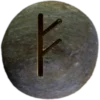
Fehu (ᚠ), pronounced “FAY-hoo,” represents wealth, movable property, and prosperity within Elder Futhark traditions connected to the Old English Rune Poem. Early Germanic societies often measured success through cattle ownership, which explains why the rune developed associations with abundance, responsibility, and social standing. The Old English Rune Poem describes wealth as beneficial when shared generously, yet dangerous when greed controls human behavior.
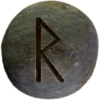
Raido (ᚱ), pronounced “RYE-thoh,” relates to travel, movement, and ordered journeys through both physical and spiritual experiences. The rune appears closely connected with horses, roads, communication, and the responsibilities carried by travelers moving between distant communities. Within the symbolic framework preserved by the Old English Rune Poem, Raido (ᚱ) encourages disciplined action and thoughtful direction instead of reckless wandering or careless decision making.
The Importance of Old English Rune Poem to Asatruar
The Old English Rune Poem holds deep importance for many Asatruar because it preserves symbolic teachings connected with early Germanic spirituality, ethics, and cultural identity. Asatru, pronounced “AH-sah-troo,” refers to a modern religious movement inspired by pre Christian northern European traditions and the worship of Norse gods. Practitioners often study historical sources carefully because surviving material from early Germanic cultures remains limited.
Many Asatruar value the poem because it provides insight into how earlier communities understood runes beyond simple writing systems. The verses connect each rune with moral lessons, natural forces, and social responsibilities that still resonate within modern spiritual practice. Readers frequently use the poem during meditation, ritual preparation, educational gatherings, and personal reflection concerning honor, wisdom, and reciprocal relationships.
The Old English Rune Poem also strengthens cultural continuity by linking modern practitioners with older Germanic literary traditions preserved through difficult historical periods. Its symbolic language encourages thoughtful interpretation rather than rigid doctrine, allowing different communities to explore meaningful spiritual connections while still respecting historical scholarship and linguistic accuracy.