Last Updated on April 25, 2026
Table of Contents
The Swift Eight-Legged Steed of the Gods
Sleipnir stands as one of the most extraordinary creatures in Norse mythology, known as the eight-legged horse who carries Odin across realms with unmatched speed and grace. The name Sleipnir, pronounced SLAYP-neer, derives from an Old Norse root meaning “the slipper” or “the glider,” which reflects his smooth and effortless movement. You may also encounter alternate spellings such as Sleipner or Sleip, though Sleipnir remains the most widely accepted and historically accurate form.
This remarkable horse possesses eight legs, which symbolize not only speed but also stability across difficult terrain and unseen worlds. His form allows him to travel through land, sky, and even the realm of the dead without hesitation, making him a bridge between different planes of existence. Such qualities elevate Sleipnir beyond a simple mount, since he embodies motion itself and the ability to transcend ordinary boundaries.
Sleipnir’s origin adds complexity to his story, since he was born through an unusual transformation involving Loki, the trickster figure in Norse mythology. Loki took the form of a mare to distract a powerful stallion, and this act led to Sleipnir’s birth, which blends cunning with unintended consequence. This origin story highlights the unpredictable nature of mythic events, where clever actions can produce outcomes that reshape the divine world.
Origins and Mythic Accounts
Accounts within the Prose Edda describe Sleipnir as the finest of all horses, a creature whom Odin values above all others for his unmatched abilities. Snorri Sturluson records that Sleipnir carries Odin during journeys that require speed, endurance, and access to hidden realms, including the path to Hel. These descriptions emphasize trust and reliance, since Odin chooses Sleipnir for tasks that demand precision and strength.
In poetic sources, Sleipnir appears in imagery that connects him with funerary rites and the passage between life and death, where his presence signals movement beyond mortal limits. This association reinforces his role as a guide, since he enables safe travel through uncertain or dangerous regions. Such portrayals deepen his symbolic meaning, since he becomes a companion in transitions rather than merely a means of transport.
Stories often describe his motion as fluid and unstoppable, which aligns with his name and reinforces the sense of effortless power that defines him. His eight legs contribute to this impression, since they suggest a rhythm and balance that surpass ordinary physical limits. Through these accounts, Sleipnir represents mastery over distance and the ability to navigate complex paths without losing direction.
Symbolism and Interpretive Meaning
Sleipnir’s eight legs invite interpretation, since they may symbolize the directions of space or the extension of movement across multiple dimensions. This feature suggests a worldview where travel involves more than physical distance, since it includes transitions between states of being. Such symbolism aligns closely with Odin’s role as a seeker of knowledge who ventures into realms that others avoid.
The horse’s connection to Odin also reflects themes of wisdom and exploration, since Sleipnir supports journeys that expand understanding rather than simple conquest. His presence indicates readiness for discovery, where movement serves a purpose tied to insight and transformation. This relationship reinforces the idea that true progress requires both capability and intention.
Interpretations often highlight Sleipnir as a symbol of adaptability, since he moves seamlessly through environments that challenge ordinary creatures. This adaptability mirrors the broader mythological emphasis on resilience and awareness, where survival depends on the ability to respond effectively to change. Through Sleipnir, Norse mythology expresses a vision of movement that combines strength, balance, and purpose.
Runes of Motion and Insight
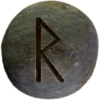
The rune Raido (ᚱ), pronounced RYE-doh, connects strongly with Sleipnir through its association with travel, rhythm, and purposeful movement across distances. This rune represents the journey itself, emphasizing direction and the harmony between traveler and path, which aligns with Sleipnir’s role as a guide through multiple realms. Its meaning highlights the importance of intentional motion, where each step contributes to a larger progression.
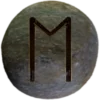
The rune Ehwaz (ᛖ), pronounced EH-wahz, reflects partnership, trust, and cooperation between rider and steed, which mirrors the bond between Odin and Sleipnir. Ehwaz (ᛖ) symbolizes mutual reliance and coordinated effort, emphasizing that success arises through balance and shared purpose. Together, Raido (ᚱ) and Ehwaz (ᛖ) capture the essence of Sleipnir’s function as both a vehicle and a companion in journeys that require strength and understanding.
Meaning for Modern Asatruar
Sleipnir holds strong meaning for Asatruar, since he represents the ability to move between challenges with confidence and clarity while maintaining balance across different aspects of life. Many practitioners view him as a symbol of guided travel, where intention shapes each step and leads toward growth or understanding. His eight legs remind them that stability can exist even during rapid movement or significant change.
His connection to Odin reinforces themes of exploration and knowledge, encouraging individuals to pursue insight through experience rather than passive observation. Practitioners often reflect on Sleipnir as a reminder that progress requires both trust and adaptability, especially when facing unfamiliar paths. Through this figure, they explore how strength, partnership, and awareness combine to support meaningful journeys.