Last Updated on May 17, 2026
Table of Contents
Landnámabók and the Foundations of Early Iceland
The Origins and Legacy of Landnámabók
Landnámabók (known as the Book of Settlements) , pronounced “LAHND nowm ah boak,” stands among the most important medieval Icelandic texts because it records the settlement of Iceland during the ninth and tenth centuries. The word Landnámabók combines the Old Norse terms “landnám,” meaning land taking or settlement, and “bók,” meaning book. Several writers and scholars preserved the work through handwritten manuscripts, although the earliest complete versions disappeared centuries ago. Historians still value the surviving copies because they preserve detailed genealogies, migration stories, and descriptions of the first Icelandic families.
Many scholars refer to Landnámabók by alternative names such as The Book of the Icelanders’ Settlements or simply Landnáma, pronounced “LAHND now mah.” The text names more than four hundred settlers and thousands of descendants, creating a broad picture of social development during Iceland’s earliest generations. Writers connected many settlers to Norway, the British Isles, and other North Atlantic regions, which helps modern researchers trace patterns of movement and cultural exchange. Medieval Icelandic society valued ancestry deeply, so these records carried political, legal, and social importance throughout the commonwealth period.
Landnámabók survives through several important versions, including the Sturlubók and Hauksbók manuscripts. These names come from influential Icelandic figures who compiled or copied the text during the thirteenth and fourteenth centuries. The surviving manuscripts differ in details, although they preserve the same general structure and historical purpose. Scribes often updated family lines and regional information, which means the work reflects both early settlement traditions and later medieval political concerns.
The narrative style within Landnámabók combines straightforward historical recording with memorable storytelling that keeps the text engaging even for modern readers. Readers encounter accounts of explorers crossing dangerous seas, powerful chieftains claiming valleys, and families building farms in isolated landscapes shaped by volcanic activity. Some sections describe sacred places, legal customs, and conflicts between neighboring groups, offering valuable insight into Norse cultural practices. Historians frequently compare these accounts with archaeological discoveries because the text sometimes confirms settlement dates and regional occupation patterns.
Pronunciation, Cultural Meaning, and Historical Influence
The Icelandic letter “á” sounds similar to “ow” in the English word “cow,” while “ó” sounds close to “oh” in “go.” The letter “ð,” called eth and pronounced softly like “th” in “this,” appears often in related Icelandic texts connected to settlement history and Norse literature. Readers unfamiliar with séríslenskur letters, meaning uniquely Icelandic letters, often find these spellings challenging at first because English does not contain equivalent sounds. Careful pronunciation helps preserve the rhythm and meaning found within the original language traditions.
Landnámabók shaped modern understanding of Iceland’s founding more strongly than almost any other medieval source from the North Atlantic world. Genealogists continue using the text because many Icelandic families trace ancestry directly through names recorded within its chapters. Literary scholars also study the work because it influenced the Icelandic Sagas, especially narratives involving family honor, migration, and disputes over property. The text preserves social memory in a way that blends history with identity, giving later generations a shared account of national beginnings.
Modern historians approach Landnámabók carefully because medieval authors sometimes combined oral traditions with political agendas and regional pride. Even so, the text remains remarkably detailed when compared with many European records from the same era. Archaeological findings often support parts of its chronology, particularly regarding farm settlements and travel routes across Iceland. Researchers therefore treat the work as both a literary creation and a valuable historical document that reveals how medieval Icelanders understood their own origins.
Interest in Landnámabók extends beyond academic circles because many readers feel drawn toward its stories of exploration, resilience, and Community building. The work presents settlers as individuals facing harsh weather, uncertain alliances, and unfamiliar terrain while attempting to create stable lives for future generations. Those themes continue resonating strongly with readers who appreciate Norse history and Icelandic cultural traditions. Museums, universities, and historical organizations regularly reference the text when discussing Viking expansion and early Scandinavian society.
Elder Futhark Runes Connected with Landnámabók
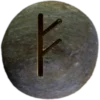
The Elder Futhark rune Fehu (ᚠ), pronounced “FAY hoo,” often connects symbolically with Landnámabók because the text focuses heavily on land ownership, wealth, and the prosperity gained through successful settlement. Fehu (ᚠ) represented movable wealth such as cattle during the early Germanic period, although later interpretations expanded its meaning toward abundance and social influence. Readers sometimes associate the rune with ambitious settlers who crossed dangerous seas hoping to secure fertile land and establish respected family lines within Iceland’s growing communities.
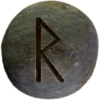
The rune Raido (ᚱ), pronounced “RYE though,” also relates strongly to Landnámabók because migration and travel shape nearly every major narrative within the text. Raido (ᚱ) traditionally symbolized journeys, movement, and purposeful travel guided by social order and personal determination. Icelandic settlers traveled across rough oceans while carrying livestock, tools, religious traditions, and legal customs into unfamiliar territory. Modern students of Norse symbolism often connect Raido (ᚱ) with the courage and planning required to build stable settlements far from ancestral homelands.
Landnámabók and Its Importance to Asatruar
Many Asatruar value Landnámabók because it preserves cultural memory connected to pre Christian Scandinavian traditions and the social world that surrounded early Norse belief systems. The text describes family loyalty, regional leadership, and settlement customs that help modern practitioners understand how earlier Icelandic communities organized daily life. Although the work does not function as a religious scripture, it still provides historical context for values often associated with Asatru, pronounced “OWS ah troo.”
Asatruar also appreciate Landnámabók because it records the lives of people who lived close to the transition between traditional Norse religion and Christianity in Iceland. Many readers study the text alongside the Icelandic sagas and poetic sources to gain a fuller understanding of ancestral traditions and social ethics. The work strengthens cultural identity for some practitioners because it connects spiritual interests with documented historical communities rather than purely legendary narratives.