Last Updated on April 25, 2026
Table of Contents
Unnr, The Deep Rolling Wave
Unnr appears among the named sea daughters whose identities reflect distinct qualities of ocean movement, with her name closely tied to the idea of rolling or surging waves. Pronunciation follows OONR, where the “U” carries a long “oo” sound, and the double “nn” compresses into a firm nasal tone before the final consonant. Alternate spellings include Unn and Unnrh, while some texts present the form Uðr, pronounced OOTHR, where “ð” sounds like a soft “th” in “this.”
Her defining character centers on the continuous, rhythmic motion of waves that travel across open water without sharp breaks or sudden force. Storytellers describe Unnr as a steady rolling presence that shapes the surface over long distances, creating patterns that guide experienced sailors during extended voyages. This association with sustained motion distinguishes her from figures tied to abrupt or violent sea activity.
References preserved in the Prose Edda include Unnr among nine daughters connected with a powerful sea figure, each representing a specific aspect of ocean behavior. Her name highlights the rolling quality of waves that move in succession, forming a pattern that observers can read and anticipate. This inclusion confirms her role within a structured system that translates environmental observation into descriptive naming.
Mariners often interpret Unnr as a sign of reliable movement, since her waves provide a rhythm that supports navigation and timing across wide stretches of water. Her presence suggests continuity rather than disruption, allowing sailors to align their actions with predictable patterns in the sea. This practical connection ensures that her identity remains grounded in real maritime experience.
Name Structure and Phonetic Features
The name Unnr carries a compact structure that conveys motion through sound, with the elongated vowel suggesting continuity and flow within spoken expression. Linguistic examination links the root with wave or surge, reinforcing the idea of rolling movement across the ocean surface. Pronunciation remains OONR in modern usage, though variations appear depending on regional interpretation.
Alternate forms such as Uðr introduce the séríslenskur letter “ð,” which produces a voiced “th” sound that softens the transition between vowel and consonant. This variation highlights how phonetic shifts occur across manuscripts while preserving the underlying meaning tied to wave motion. Readers benefit from recognizing that both forms refer to closely related concepts within sea descriptions.
Visual interpretations often depict Unnr as long, rounded swells that travel in sequence, creating a sense of continuity across the horizon without sharp peaks or sudden breaks. Artists emphasize smooth transitions between crests and troughs, reflecting the steady rhythm associated with her identity. This imagery aligns closely with observations made by sailors who rely on consistent wave patterns.
Unnr occupies a distinct role among sea figures because she represents duration and repetition, focusing on how waves maintain form over time rather than changing abruptly. This perspective highlights the importance of recognizing patterns that extend beyond immediate moments. Her identity reinforces the value of patience and observation within maritime environments.
Role in Narrative and Seafaring Knowledge
Narrative traditions use Unnr to communicate how steady movement supports navigation, especially during long journeys where consistency becomes essential for maintaining direction and timing. Her presence signals that the sea offers patterns that can be learned and followed, rather than presenting constant unpredictability. These stories encode practical guidance within memorable figures.
Her placement within poetic lists reflects a deliberate effort to categorize ocean behavior through distinct qualities that observers could easily identify and recall. Unnr’s association with rolling motion provides a clear reference point for understanding sustained wave activity across open water. This structured approach demonstrates how early observers organized environmental knowledge into accessible forms.
Modern interpretations continue to reference Unnr when discussing how rhythm and repetition shape both natural systems and human interaction with them. Her name remains a concise way to describe continuous wave motion, linking historical observation with present understanding. This continuity highlights the enduring relevance of descriptive naming traditions.
Pronunciation remains OONR across contemporary contexts, with alternate spellings like Unn simplifying written form while preserving core phonetic elements. Her identity continues to emphasize the importance of recognizing patterns within dynamic environments, offering insight into how people interpret and respond to steady movement. This connection ensures her lasting presence in discussions of maritime awareness and cultural memory.
Runic Patterns Associated with Unnr
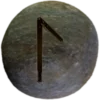
Laguz (ᛚ) rune aligns closely with Unnr through its connection to flowing water and the continuous movement that defines wave patterns across open seas. This rune emphasizes intuition and adaptability, reflecting how sailors learn to read and follow the rhythm associated with Unnr’s presence. Its symbolism supports interpretations focused on harmony with natural motion.
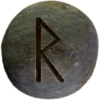
Raido (ᚱ) rune offers a complementary association by representing journey, progression, and the act of moving along a path shaped by external forces. This aligns with how Unnr’s rolling waves guide travel, providing a consistent rhythm that supports forward motion across long distances. Together, Laguz (ᛚ) and Raido (ᚱ) create a framework that highlights flow and direction within maritime experience.
These runic connections deepen understanding of Unnr by linking her characteristics with symbolic systems that describe movement, continuity, and purposeful travel. Laguz (ᛚ) captures the fluid nature of her waves, while Raido (ᚱ) emphasizes the journey shaped by that motion. Their combined meaning reinforces her role as a figure tied to rhythm and progression.
Unnr in Contemporary Asatruar Understanding
Asatruar communities often view Unnr as a symbol of steady progress and the importance of aligning with natural rhythms in both environment and personal experience. Her association with rolling waves encourages practitioners to focus on continuity rather than sudden change, supporting a mindset grounded in patience and awareness. This perspective strengthens connections between observation and lived practice.
Her imagery also reinforces the idea that movement does not always require force, as consistent patterns can carry individuals forward with reliability and balance. Practitioners incorporate this understanding into reflections on journeys, emphasizing trust in gradual progression shaped by surrounding conditions. Unnr continues to serve as a meaningful figure connecting traditional insight with modern perspectives.