Last Updated on April 24, 2026
Table of Contents
The Strength and Mythic Role of Svaðilfari
Svaðilfari pronounced SVAH-thil-fah-ree appears in Norse mythology as a powerful and tireless stallion whose strength shapes one of the most unusual and consequential stories within the mythic tradition. Alternate spellings include Svadilfari and Svaðilfari, with the letter ð pronounced like the voiced th in the word this. His name often suggests hard travel or difficult journeys, which reflects both his endurance and his central role in a demanding task.
He belongs to a mysterious builder who arrives in Ásgarðr pronounced AWS-gar-thr, offering to construct an immense wall that would protect the realm of the gods from external threats. This builder requests the sun, the moon, and the goddess Freyja pronounced FRAY-yah as payment, which causes concern among the gods despite their desire for strong defenses. Loki encourages acceptance of the deal under strict conditions, believing that the builder cannot complete the work within a single winter.
Svaðilfari proves essential to the builder’s progress, since he pulls enormous stones with unmatched speed and strength, allowing the wall to rise far faster than the gods expected. His power astonishes the gods and undermines their confidence in Loki’s plan, since the builder approaches completion well before the deadline. This development reveals how Svaðilfari’s physical might directly influences the fate of the agreement.
The Deception and Transformation of Loki
As the deadline draws near, the gods realize that the builder will claim his reward, which threatens both cosmic order and their own authority within Ásgarðr. They blame Loki for the situation and demand that he find a solution that prevents the builder from completing the task on time. Loki responds with a plan that relies on transformation and deception rather than direct confrontation.
Loki transforms into a mare and approaches Svaðilfari, using distraction and allure to draw the stallion away from his work during a critical moment. Svaðilfari follows the disguised Loki into the wilderness, abandoning the builder and halting progress on the wall long enough to ensure failure. This act disrupts the agreement and allows the gods to avoid fulfilling their costly promise.
The builder reveals his true identity as a giant when his plan collapses, and Thor pronounced THOR defeats him, restoring security to the realm of the gods. Meanwhile, Loki’s transformation leads to an unexpected outcome, since he later gives birth to Sleipnir pronounced SLAYP-neer, an eight-legged horse who becomes Odin’s steed. This connection establishes Svaðilfari as the progenitor of one of the most remarkable creatures in Norse mythology.
Sources and Symbolic Meaning
The story of Svaðilfari appears in the Prose Edda pronounced PROH-suh ED-da, where Snorri Sturluson pronounced SNOR-ree STURL-oo-son preserves the narrative with vivid detail and careful structure. This account emphasizes both the physical strength of the stallion and the clever strategy that disrupts the builder’s progress. The text also highlights the interplay between brute force and cunning within Norse mythic storytelling.
Svaðilfari represents more than physical power, since his role illustrates how strength can shape events yet remain vulnerable to intelligence and manipulation. His story also connects to themes of transformation, since his interaction with Loki leads to the birth of Sleipnir and introduces a new element into the mythological world. This outcome shows how unexpected consequences often arise from attempts to control or redirect powerful forces.
Through his actions and legacy, Svaðilfari contributes to a narrative that explores balance between strength, strategy, and consequence. His presence within the myth underscores the importance of cooperation and the risks that emerge when one relies solely on physical ability. This enduring tale continues to highlight the dynamic relationship between power and ingenuity within Norse tradition.
Runes Reflecting the Nature of Svaðilfari
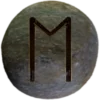
The rune Ehwaz (ᛖ) pronounced EH-wahz aligns closely with Svaðilfari, since it represents partnership, movement, and the bond between horse and rider within ancient Germanic culture. This rune emphasizes trust and cooperation, qualities that define the relationship between the builder and his powerful stallion during the construction of the wall. Svaðilfari embodies the strength and reliability that Ehwaz (ᛖ) symbolizes, while also revealing how such partnerships can influence larger outcomes.
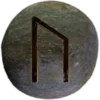
The rune Ūruz (ᚢ) pronounced OO-rooz also connects with Svaðilfari through its association with raw strength, endurance, and untamed vitality that drives physical achievement. This rune captures the immense power that allows Svaðilfari to transport massive stones and sustain demanding labor over extended periods. Together, these runes reflect the balance between controlled effort and natural force that defines Svaðilfari’s role within the myth.
The Importance of Svaðilfari to Asatruar
Svaðilfari holds meaning for Asatruar as a symbol of strength guided by purpose, reflecting the value of endurance and reliability within both physical and spiritual efforts. His role in the myth highlights how dedicated effort can achieve remarkable results when paired with direction and intent. This perspective encourages respect for both natural ability and disciplined application.
His connection to the birth of Sleipnir also carries significance, since it demonstrates how unexpected outcomes can arise from complex situations involving transformation and adaptation. Many Asatruar interpret this aspect as a reminder that change often produces new opportunities even when it begins with uncertainty. Svaðilfari represents both the power of effort and the potential for creation that emerges from challenging circumstances.