Last Updated on April 25, 2026
Table of Contents
The Celestial Wolves Who Pursue Sun and Moon
Sköll and Hati race across the sky in Norse mythology as relentless wolves who chase the sun and the moon, creating a sense of urgency within the cosmic order. The name Sköll, pronounced SKOHL, uses the séríslenskur letter ö, which sounds like the “ur” in “burn,” while Hati, pronounced HAH-tee, carries a sharper and more direct tone. Alternate spellings include Skoll and Hati Hróðvitnisson, pronounced HROTH-vit-nee-son, which identifies Hati as the son of a fearsome wolf lineage.
These wolves pursue celestial bodies with unwavering determination, since Sköll chases the sun while Hati follows the moon across the heavens. Their movement explains the passage of time in mythic terms, where day and night emerge from a constant chase rather than a fixed cycle. This imagery transforms ordinary observation into a dramatic narrative, where light and darkness depend on motion and pursuit.
Their presence introduces tension into the cosmos, since their eventual success would disrupt the balance that sustains the world. The myth does not portray their chase as random or chaotic, because it follows a defined path that mirrors the predictable movement of celestial bodies. This structured pursuit reflects a worldview where order and danger coexist, each shaping the other through ongoing interaction.
Mythic Accounts and Lineage
Accounts within the Prose Edda describe Sköll and Hati as offspring of a giant wolf, often associated with Fenrir’s lineage, which places them within a family tied to destruction and transformation. These connections reinforce their role as agents of eventual upheaval, since their actions contribute to the unfolding of Ragnarök. Their lineage adds depth to their identity, linking their relentless pursuit to a broader narrative of cosmic conflict.
Descriptions emphasize their constant motion, since they never abandon their chase or lose focus on their targets. This persistence reflects a form of inevitability, where their success does not depend on chance but on the gradual passage of time. Their presence within these accounts creates a sense of anticipation, since each day and night brings them closer to their goal.
During Ragnarök, Sköll and Hati finally catch their prey, devouring the sun and the moon and plunging the world into darkness. This moment marks a turning point where the familiar structure of time collapses, allowing chaos to spread across the cosmos. Their success highlights the culmination of their long pursuit, transforming them from symbols of tension into agents of profound change.
Symbolism and Cosmic Meaning
Sköll and Hati embody the passage of time through their endless chase, since their movement mirrors the daily journey of the sun and the moon across the sky. This connection transforms celestial motion into a living process, where time advances through action rather than abstraction. Their pursuit therefore represents continuity shaped by effort and direction.
Their wolf forms carry associations with instinct, survival, and raw determination, which reinforce their role as relentless hunters within the cosmic landscape. These traits align with their function, since they do not hesitate or deviate from their purpose. Their behavior reflects a natural force that operates without distraction, emphasizing focus and persistence.
Interpretations often view Sköll and Hati as symbols of inevitable endings, since their eventual success signals the breakdown of established order. This perspective highlights the tension between stability and change, where ongoing motion leads toward transformation. Through these wolves, Norse mythology expresses a vision of time that moves steadily toward a decisive and transformative moment.
Runes of Pursuit and Transformation
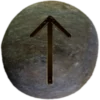
The rune Tiwaz (ᛏ), pronounced TEE-wahz, connects with Sköll and Hati through its association with direction, purpose, and unwavering focus in pursuit of a goal. This rune represents disciplined movement and commitment to a path, which mirrors the wolves’ relentless chase across the sky. Its meaning emphasizes determination guided by intent, reflecting their consistent and purposeful motion.
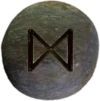
The rune Dagaz (ᛞ), pronounced DAH-gahz, aligns with Sköll and Hati through its connection to cycles of day and night, transformation, and the balance between light and darkness. This rune captures the transition that occurs as the wolves chase the sun and the moon, shaping the rhythm of time. Together, Tiwaz (ᛏ) and Dagaz (ᛞ) express both the pursuit and the transformation embodied by Sköll and Hati.
Meaning for Modern Asatruar
Sköll and Hati hold strong meaning for Asatruar, since they represent the steady passage of time and the inevitability of change within both the natural world and human experience. Many practitioners view these wolves as reminders that persistence and direction shape outcomes over long periods. Their endless chase encourages reflection on goals that require sustained effort and focus.
Their role in Ragnarök reinforces the idea that even stable systems eventually face transformation, which invites consideration of cycles within personal and communal life. Practitioners often interpret Sköll and Hati as symbols of motion that leads toward necessary change, rather than random disruption. Through these figures, they explore how determination, timing, and transformation interact within a larger pattern of existence.