Last Updated on April 25, 2026
Table of Contents
The World-Encircling Serpent of the Deep
Jörmungandr stands as one of the most formidable beings in Norse mythology, known as the immense serpent who encircles the world and dwells within the surrounding ocean. The name Jörmungandr, pronounced YOR-moon-gand-r, includes the séríslenskur letter ö, which sounds similar to the “ur” in “burn,” giving the name a distinct tonal quality. You may also encounter alternate spellings such as Jormungand, Jörmungand, or Iormungandr, though the traditional Old Norse form retains the diacritical mark and final consonant.
This serpent belongs to a powerful lineage, as he is one of the offspring of Loki and the giantess Angrboða, which places him among beings associated with chaos and transformation. The gods recognized his growing size and threat, so they cast him into the ocean that surrounds Midgard, where he continued to grow until he encircled the entire world. His immense length allows him to grasp his own tail, forming a continuous loop that symbolizes both containment and latent destruction.
Jörmungandr’s presence creates a constant tension within the mythological world, since his existence suggests an eventual breaking point where balance will fail. He remains hidden beneath the waves, yet his size and power influence the stability of the world above. This dual nature reflects a deeper theme in Norse mythology, where unseen forces shape reality and maintain a fragile equilibrium that can collapse under pressure.
Encounters and Mythic Narratives
Accounts within the Prose Edda and Poetic Edda describe several encounters between Jörmungandr and Thor, each emphasizing rivalry and inevitability. One well known tale recounts how Thor attempts to catch the serpent while fishing, using a massive hook baited with an ox head, which leads to a dramatic confrontation. Thor manages to pull Jörmungandr toward the surface, yet the struggle ends before a decisive outcome occurs, reinforcing the idea that their conflict remains unresolved until a final moment.
These encounters highlight the tension between order and chaos, since Thor represents protection and stability while Jörmungandr embodies a force that threatens both. Their interactions do not produce immediate resolution, which adds to the sense of impending conflict that defines their relationship. This ongoing struggle contributes to a narrative structure where destiny unfolds gradually rather than through sudden conclusion.
During Ragnarök, the foretold series of events that leads to the destruction and renewal of the world, Jörmungandr emerges from the sea and engages Thor in a final battle. The serpent releases venom into the air and water, creating widespread destruction that affects gods and humans alike. Thor defeats Jörmungandr but succumbs to the poison after taking nine steps, which underscores the mutual cost of their confrontation.
Symbolism and Interpretive Themes
Jörmungandr’s circular form, where he grasps his own tail, reflects the concept of a boundary that defines the world while also containing immense potential for change. This image suggests continuity and enclosure, yet it also hints at the danger of collapse if that boundary breaks. The serpent therefore represents both protection and threat, depending on how one interprets his position around Midgard.
His association with the ocean connects him to depth, mystery, and forces that remain hidden beneath the surface of perception. Water in Norse mythology often symbolizes both life and danger, and Jörmungandr embodies this dual nature through his immense presence beneath the waves. His hidden form influences the world indirectly, reinforcing the idea that unseen forces shape visible outcomes.
Interpretations often view Jörmungandr as a symbol of inevitable change, since his role in Ragnarök ensures that the current order cannot remain permanent. This perspective emphasizes the cyclical nature of existence, where destruction leads to renewal and transformation. Through Jörmungandr, the mythology presents a powerful image of balance under tension, where stability depends on forces that could also bring about its end.
Runes of Depth and Disruption
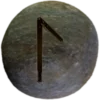
The rune Laguz (ᛚ), pronounced LAH-gooz, aligns closely with Jörmungandr through its association with water, intuition, and the hidden depths that shape visible reality. This rune represents the flow of unseen forces, reflecting the serpent’s presence beneath the ocean and his influence on the world above. Its meaning emphasizes adaptability and awareness, which mirror the unpredictable nature of deep waters.
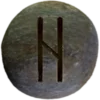
The rune Hagalaz (ᚺ), pronounced HAH-gah-lahz, connects to Jörmungandr through themes of disruption, transformation, and sudden change that reshapes existing structures. Hagalaz (ᚺ) represents forces that break patterns and introduce new conditions, which parallels the serpent’s role in Ragnarök and the upheaval he brings. Together, Laguz (ᛚ) and Hagalaz (ᚺ) capture the balance between hidden depth and explosive transformation embodied by Jörmungandr.
Meaning for Modern Asatruar
Jörmungandr holds significant meaning for Asatruar, since he represents the tension between stability and change that defines both the natural world and human experience. Many practitioners view him as a reminder that powerful forces often remain hidden until conditions bring them into the open. His presence encourages awareness of underlying influences that shape events over time.
His role in Ragnarök reinforces the idea that transformation often involves both creation and destruction, which invites reflection on cycles within personal and communal life. Practitioners often consider Jörmungandr as a symbol of boundaries that protect yet also constrain, highlighting the need for balance and understanding. Through this figure, they explore how tension and change contribute to growth and renewal.