Last Updated on April 25, 2026
Table of Contents
Gymir’s Grove: A Realm of Giants and Boundaries
Gymir’s Grove, known in Old Norse as Gymisgarðr, pronounced roughly as “GYEE-mis-garthr,” includes the séríslenskur letter ð, which sounds like the soft “th” in “this,” giving the name a distinctive tonal quality. The word garðr, meaning enclosure or yard, suggests a bounded and protected space, while Gymir refers to the giant associated with this domain. Alternate spellings include Gymisgard, Gymisgarthr, and Gymisgarth, each reflecting different transliteration practices from Old Norse into modern forms. This location holds significance within Norse mythology as the dwelling place of the Jötunn Gymir and his daughter Gerðr.
Descriptions portray Gymir’s Grove as a secluded and formidable environment situated within Jötunheimr, the land of giants, where natural barriers and mystical defenses discourage intruders. The grove does not function as a peaceful forest, but instead presents an imposing and guarded territory that reflects the strength and status of its inhabitants. Its enclosed nature reinforces the idea of separation between worlds, emphasizing the divide between the gods and the giants. This boundary plays a crucial role in shaping interactions that occur within and around the grove.
Gerðr, the daughter of Gymir, resides within this grove and becomes central to one of the most well-known mythological narratives involving this location. Her presence transforms Gymir’s Grove into more than a simple dwelling, as it becomes the focal point of a story that bridges divine and giant lineages. The grove therefore acts as both a physical and symbolic setting where relationships between opposing forces develop. This dual function adds depth to its role within Norse cosmology.
Accounts emphasize the difficulty of reaching Gymir’s Grove, highlighting obstacles that test determination and resolve. Travelers who seek entry must confront both physical dangers and supernatural challenges, which reflect the protective nature of the giants’ domain. These elements reinforce the idea that access to such places requires more than strength alone, demanding persistence and purpose. Through this portrayal, the grove stands as a representation of guarded knowledge and restricted spaces within mythological landscapes.
Connection to the Story of Freyr and Gerðr
Gymir’s Grove features prominently in the poem Skírnismál from the Poetic Edda, where the god Freyr becomes enamored with Gerðr and seeks to win her affection. Freyr sends his servant Skírnir to journey into the grove, carrying gifts and threats in an effort to persuade her to accept his proposal. The narrative unfolds within the boundaries of this guarded space, where Skírnir must navigate both the physical environment and the will of its inhabitants. This setting enhances the tension of the story, as it places the emissary within a realm that does not welcome outsiders.
The grove’s role in this tale highlights its importance as a meeting point between different worlds, where negotiation and conflict intersect. Skírnir’s success in securing Gerðr’s agreement demonstrates that even the most fortified domains can yield under the right combination of strategy and determination. This outcome does not diminish the grove’s strength, but instead underscores its significance as a place where critical decisions unfold. The story ensures that Gymir’s Grove remains an essential element within the broader narrative tradition.
Symbolism of Enclosure and Separation
Gymir’s Grove embodies the concept of enclosure, representing both protection and isolation within the mythological framework. Its boundaries serve to safeguard those inside while also preventing easy access from external forces, creating a sense of exclusivity and control. This dual nature reflects broader themes within Norse mythology, where separation between realms often defines relationships and interactions. The grove’s structure therefore mirrors the complex dynamics between gods, giants, and other beings.
Imagery associated with the grove often emphasizes its dense vegetation and formidable barriers, which contribute to its reputation as a challenging destination. These features do not merely create a physical obstacle, but also symbolize the emotional and cultural distance between different groups. The grove thus operates as both a literal location and a metaphor for boundaries that shape identity and interaction. It continues to hold a significant place in mythological interpretation.
Runic Resonance of Boundaries and Desire
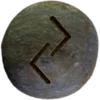
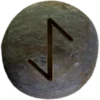
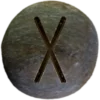
The rune Eihwaz (ᛇ) connects strongly with Gymir’s Grove, as it represents endurance, transformation, and the axis that links different realms within Norse cosmology. This rune reflects the grove’s role as a place where journeys lead to significant change, particularly in the story involving Freyr and Gerðr. Another rune associated with this location is Gebō (ᚷ), which symbolizes exchange, partnership, and the balance created through giving and receiving. Together, these runes capture the interplay between separation and connection that defines Gymir’s Grove.
Meaning and Importance to Asatruar
Gymir’s Grove holds importance to Asatruar, who often interpret it as a symbol of boundaries that protect identity while also challenging individuals to engage with what lies beyond familiar limits. Its association with the story of Freyr and Gerðr encourages reflection on relationships that bridge differences and require effort to maintain. Many view the grove as a reminder that meaningful connections often emerge from spaces that initially seem inaccessible or resistant. This perspective highlights the value of persistence and thoughtful action.
Followers frequently draw lessons from the grove’s portrayal when considering how to navigate personal and spiritual boundaries in their own lives. The balance between protection and openness reflected in this setting offers guidance on maintaining integrity while remaining receptive to growth. Gymir’s Grove continues to influence modern understanding of connection, challenge, and the spaces that define both separation and unity.