Last Updated on April 20, 2026
Table of Contents

The Silent Strength of Endurance and Vengeance
Víðarr, also spelled Vidar or Widar, stands as a figure defined by silence, resilience, and unwavering purpose in the face of immense destruction. His name, pronounced “VEE-thar,” uses the séríslenskur letter í, which sounds like a long “ee,” and the letter ð, which sounds like the “th” in “this.” This combination creates a name that feels steady and grounded, reflecting his calm yet powerful presence.
He exists as the son of Odin and the giantess Gríðr, whose name is pronounced “GREETH-r,” which places him at the intersection of divine authority and primal strength. This lineage gives him a unique position, combining calculated intention with raw endurance drawn from ancient forces. Víðarr does not seek attention or recognition, since his role centers on action carried out at the necessary moment.
His identity connects strongly with silence, not as absence of voice but as a deliberate choice to act without unnecessary words or display. This quality sets him apart from more expressive figures, emphasizing a form of strength rooted in patience and readiness. Víðarr embodies the idea that power can exist without constant demonstration, revealing itself only when required.
The Avenger of Odin
Víðarr plays a crucial role during Ragnarök, where he avenges the death of his father by confronting and killing the wolf Fenrir. This act defines his purpose and establishes him as a figure of justice carried out through decisive and controlled action. He approaches this moment with preparation rather than impulse, ensuring that his effort achieves its intended result.
Descriptions highlight his use of a specially crafted shoe, assembled from discarded leather pieces, which provides the strength needed to resist Fenrir’s immense force. This detail emphasizes practicality and foresight, showing that even small contributions can combine into something powerful. Víðarr places his foot on the wolf’s jaw and tears it apart, completing an act that restores balance after devastating loss.
This moment does not rely on spectacle, since it reflects a direct and effective response to a critical threat. Víðarr’s action carries weight because it follows a period of restraint, where he waits until the exact moment demands his involvement. His role demonstrates how patience and preparation can lead to decisive outcomes when circumstances require them.
Mentions in Early Texts
Víðarr appears in the Poetic Edda, particularly in Völuspá and Grímnismál, where his role and characteristics receive clear acknowledgment. The name Völuspá is pronounced “VUR-lu-spaw,” while Grímnismál is pronounced “GRIM-nis-mawl,” each providing insight into different aspects of his identity. These texts present him as a figure who endures beyond destruction and participates in renewal.
Snorri Sturluson, pronounced “SNOR-ree STUR-loo-son,” also describes Víðarr in the Prose Edda, emphasizing his strength, silence, and role in avenging Odin. His account reinforces the idea that Víðarr represents a form of power that operates without excess or distraction. These consistent references across sources confirm his importance within early tradition.
Víðarr survives the events of Ragnarök, which places him among those who continue into a renewed world after widespread devastation. This survival highlights his connection to endurance and continuity, suggesting that his strength extends beyond a single act. His presence in this new phase reinforces his identity as a figure of lasting stability.
Runes Associated with Víðarr
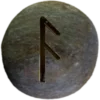
The rune Ūruz (ᚢ) connects closely with Víðarr because it represents raw strength, endurance, and the ability to withstand intense pressure without breaking. This rune reflects the physical and inner resilience that defines his character, especially during moments that demand sustained effort. Víðarr’s controlled power aligns with the grounded and steady energy of Ūruz (ᚢ).
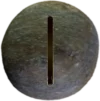
The rune Isaz (ᛁ) also relates to Víðarr through its association with stillness, focus, and the clarity that comes from maintaining control under challenging conditions. This rune emphasizes the importance of restraint and concentration, which mirror his silent and deliberate nature. Together, these runes highlight both the strength and composure that define his identity.
Víðarr’s Importance to Asatruar
Víðarr holds importance to Asatruar because he represents the value of patience, preparation, and acting with purpose when circumstances demand decisive action. His example encourages individuals to develop strength that remains steady rather than reactive, supporting a balanced approach to challenges. This perspective reinforces the idea that restraint can hold as much power as visible effort.
His role as an avenger also highlights the importance of addressing injustice with clarity and responsibility, rather than allowing disruption to persist unchecked. Many practitioners view his actions as a model for responding to difficult situations with both resolve and discipline. This approach supports thoughtful engagement with conflict and consequence.
Víðarr’s survival beyond destruction further emphasizes resilience and the ability to continue forward after significant hardship. By engaging with his story, Asatruar explore ways to maintain stability and purpose even when facing overwhelming change. His presence encourages a grounded mindset that values endurance, awareness, and meaningful action.