Last Updated on April 15, 2026
Table of Contents
Gunnþrá: The Battle-Threaded River
The river Gunnþrá, also written as Gunnthra, Gunnþra, or Gunnthrā in various transliterations, flows through the stark regions connected with the realm of the dead, carrying a name that combines elements of battle and threading force. Its identity suggests a current shaped by conflict and tension, which gives it a distinct role among the rivers that define boundaries within that severe landscape. Pronounced “GOON-thraw,” where “Gunn” sounds like “goon,” the letter “þ” produces a “th” sound as in “thin,” and “rá” sounds like “raw,” the name carries a firm and cutting tone.
Gunnþrá differs from rivers associated with calm distance or natural flow, since it expresses a sense of strain and intensity that evokes struggle woven into its movement. Descriptions connect the river with imagery of forceful currents that seem to pull and twist, reinforcing its association with conflict and pressure. This quality creates an environment that feels charged with tension, where movement involves resistance rather than ease.
The river forms part of a larger system of waterways that structure the underworld environment, where each named river contributes a specific characteristic that shapes the experience of that realm. Gunnþrá introduces a theme of conflict and entanglement, which contrasts with rivers that emphasize silence, width, or steady motion. Through this role, it strengthens the impression that each boundary expresses a different aspect of transition and challenge.
Gunnþrá in Early Textual Sources
It appears in river lists preserved within the Poetic Edda, where multiple waterways receive mention as part of a broader description of the underworld’s geography and organization. These lists rely on concise naming to convey meaning, allowing each river to express its character through linguistic roots rather than extended narrative detail. The inclusion of Gunnþrá within these passages confirms its recognized place among the features that define that realm.
The name Gunnþrá combines elements associated with battle and thread or strand, which shapes how readers interpret its nature within the landscape described in these texts. This combination suggests movement that intertwines force and direction, creating an impression of currents that pull in complex and forceful ways. Such naming practices allow the term itself to communicate layered meaning through a single expression.
Although detailed stories about Gunnþrá do not appear in surviving sources, its placement among other rivers contributes to a structured understanding of the underworld environment. Each named feature adds depth and variation, building a setting that feels intentional and complex rather than uniform. Gunnþrá therefore gains importance through its role within this system, reinforcing the presence of tension and force.
Symbolism and Interpretive Meaning
The symbolism of Gunnþrá centers on conflict, tension, and the intertwining forces that shape moments of transition, reflecting how struggle can influence direction and outcome. Its threaded imagery suggests movement that does not follow a straight path, emphasizing complexity and resistance within the process of passage. This perspective highlights how change often involves navigating forces that pull in different directions.
The river also represents a boundary defined by strain and interaction, emphasizing that crossing into another state can involve confronting internal and external pressures. This quality distinguishes it from rivers that symbolize calm separation or steady movement, offering a more intricate vision of how thresholds operate. The presence of such a river reinforces the diversity of experiences associated with movement between realms.
Alternate spellings such as Gunnthra, Gunnþra, and Gunnthrā appear in different manuscripts and modern interpretations, reflecting variations in transcription and linguistic reconstruction across time. These forms preserve the essential sound while adapting to different writing systems, ensuring that the name remains recognizable despite changes in spelling conventions. Through these variations, Gunnþrá continues to express its association with conflict and intertwined force.
Runes Reflecting Gunnþrá’s Nature
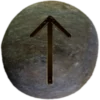
The rune Tiwaz (ᛏ), pronounced “TEE-wahz,” connects with battle, justice, and the structured force that guides conflict toward resolution, aligning closely with Gunnþrá and its association with struggle and tension. This rune represents directed energy within conflict, reflecting how the river embodies force that shapes movement through resistance. Its association with order within battle complements the river’s symbolic nature.
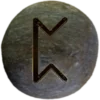
The rune Perthro (ᛈ), pronounced “PERTH-roh,” relates to hidden processes, unfolding outcomes, and the complexity of forces that operate beneath the surface, offering another meaningful link to Gunnþrá. Perthro (ᛈ) represents layered interactions that do not reveal themselves immediately, which aligns with the river’s threaded and entangled imagery. Together, these runes reflect both the visible struggle and the underlying complexity that define Gunnþrá’s symbolic presence.
Meaning of Gunnþrá for Asatruar
Gunnþrá holds importance for modern practitioners who follow traditional northern paths, since it represents the tension and conflict that shape personal growth and transformation. The river encourages reflection on how challenges often involve competing forces that require careful navigation and understanding. This perspective highlights the importance of resilience and awareness during periods of difficulty.
Many interpret Gunnþrá as a reminder that progress does not always follow a direct path, since struggle and complexity can influence direction and outcome. The imagery of intertwined currents reinforces the idea that change involves managing tension and maintaining focus. Through this understanding, Gunnþrá continues to offer a meaningful symbol that connects ancient imagery with present-day reflection and practice.