Last Updated on April 20, 2026
Table of Contents

Power, Greed, and the Cost of Control
King Níðuðr, also spelled Nidud, Niðhad, or Niðudr, stands as a ruler defined by ambition, control, and the misuse of authority in pursuit of personal gain. His name, pronounced “NEE-thood,” includes the séríslenskur letter í, which sounds like a long “ee,” and the letter ð, which produces the “th” sound found in “this.” This pronunciation gives his name a sharp yet fluid quality that reflects both calculation and underlying tension.
He appears most prominently as the captor of Völundr, where his actions reveal a mindset driven by possession rather than respect for skill or autonomy. Instead of honoring talent, he seeks to dominate it, transforming a master craftsman into a forced servant under his control. This decision shapes his identity as a figure who prioritizes personal advantage over fairness or balance.
King Níðuðr does not act without awareness, since he understands the value of Völundr’s abilities and deliberately ensures that he cannot escape. His choices reflect a calculated approach to power, where control over others becomes a central objective. This focus on domination ultimately defines his legacy within the narrative.
The Capture of Völundr
King Níðuðr captures Völundr after learning of his exceptional craftsmanship, driven by a desire to claim that skill for himself and his kingdom. He orders the smith’s hamstrings cut, which prevents escape while preserving the ability to work, creating a situation of enforced dependence. This act demonstrates a willingness to inflict lasting harm in order to secure advantage.
The king then places Völundr on an island, isolating him physically while ensuring that his creations remain accessible to the royal household. This arrangement reflects a strategy that combines confinement with exploitation, maximizing benefit while minimizing risk. King Níðuðr treats the craftsman not as a person, but as a resource to be controlled and utilized.
His actions also influence his family, as members of the royal household interact with Völundr and become entangled in the consequences of his decisions. The environment he creates fosters a dynamic where authority overrides caution, allowing events to unfold without consideration of potential outcomes. This lack of foresight contributes directly to the tragedy that follows.
Consequences and Downfall
King Níðuðr’s decisions lead to a chain of events that result in the loss of his sons and the humiliation of his household through Völundr’s calculated revenge. The craftsman kills the king’s sons and transforms their remains into objects that he presents back to the royal family, embedding retribution within crafted forms. This act reveals the extent to which the king underestimated the consequences of his actions.
He also fails to anticipate the deception involving his daughter, which extends the impact of Völundr’s revenge beyond immediate loss. These developments expose weaknesses in the king’s control, showing that authority without foresight cannot maintain stability. King Níðuðr’s inability to recognize the depth of Völundr’s resolve leads to outcomes he cannot prevent or reverse.
When Völundr escapes using wings of his own creation, the king faces the full weight of his failure, left without the control he once enforced. This moment highlights the limits of power when it relies solely on domination rather than mutual respect or understanding. King Níðuðr’s story concludes with a sense of loss shaped by his own choices.
Runes Associated with King Níðuðr
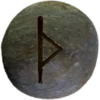
The rune Thurisaz (ᚦ) connects with King Níðuðr because it represents conflict, force, and the destructive potential that arises when power operates without restraint. This rune reflects the aggressive actions he takes to secure control, including the harm inflicted on Völundr. His behavior aligns with the raw and often dangerous energy that Thurisaz (ᚦ) embodies.
The rune Hagalaz (ᚺ) also relates to King Níðuðr through its association with disruption, sudden change, and the consequences that follow unchecked decisions. This rune mirrors the collapse of stability within his household after his actions set events into motion. Together, these runes highlight both the forceful and destabilizing aspects of his character.
King Níðuðr’s Importance to Asatruar
King Níðuðr holds importance to Asatruar because he represents the dangers of misusing authority and failing to respect the autonomy and skill of others. His story encourages individuals to consider how power influences behavior and how decisions impact those within their sphere. This perspective supports a more balanced and responsible approach to leadership.
His actions also highlight the consequences that arise when control replaces fairness, demonstrating that dominance without foresight leads to instability and loss. Many practitioners view his story as a cautionary example that emphasizes accountability and awareness. This understanding helps shape approaches to conflict and responsibility.
King Níðuðr’s narrative reinforces the importance of recognizing limits and respecting the capabilities of others, especially when those abilities hold significant value. By engaging with his story, Asatruar explore how choices shape outcomes over time. His presence encourages reflection on how authority can either support or disrupt balance within a Community.