Last Updated on April 22, 2026
Table of Contents
The Fierce Presence of Kára
Kára, pronounced “KAW-rah,” where the accented “á” carries a long open vowel sound, stands as a striking valkyrie figure connected with storms, battle, and transformation within northern legendary tradition. Alternate spellings include Kara and Cara, though Kára preserves the original diacritical form and sound more accurately. Her name often carries associations with wild natural forces, particularly the violent winds and sudden tempests that sweep across open landscapes.
Stories describe Kára as both a warrior spirit and a shape-shifter who takes the form of a swan, which allows her to move between realms with speed and grace. This swan form connects her with other valkyrie figures who share similar abilities, yet Kára’s identity emphasizes a more volatile and forceful presence. Her connection to storms reinforces her role as an agent of disruption, where she influences the outcome of battles through both physical and supernatural means.
Her story intertwines closely with Helgi Haddingjaskati, a warrior whose fate becomes deeply tied to her actions and presence. Kára supports him during combat by flying above the battlefield in her swan form, directing the flow of conflict and aiding his success. This partnership reflects a bond that blends loyalty, power, and shared destiny, creating a narrative that explores both strength and vulnerability.
The Tragic Bond with Helgi
Kára’s relationship with Helgi reveals a complex dynamic where devotion and danger exist side by side, shaping the course of their shared story. During one intense battle, she flies above him in her swan form, attempting to influence the fight by guiding his strikes and disrupting his enemies. Her presence gives him an advantage, yet it also introduces a level of risk that neither fully controls.
In a tragic turn, Helgi accidentally strikes Kára with his weapon while she circles above him, which brings an abrupt and devastating end to her life. This moment highlights the unpredictable nature of battle and the fragile line between aid and harm, especially when supernatural forces become involved. Her death carries emotional weight, as it results directly from the very connection that once strengthened them.
The story emphasizes how even powerful figures remain vulnerable within chaotic environments, where intention does not always align with outcome. Kára’s fate reinforces themes of loss and consequence, showing how bonds forged in intensity can also lead to unforeseen tragedy. Her character gains depth that extends beyond her role as a valkyrie.
Accounts in Traditional Narratives
Kára appears in the Helgi lays, which form part of the Poetic Edda, where her story unfolds alongside that of Helgi Haddingjaskati. These poems present her as a valkyrie with agency and influence, actively participating in the events that shape the narrative. The language used in these accounts conveys both her strength and the emotional intensity of her connection to Helgi.
Descriptions within these texts highlight her ability to shift form and move across the battlefield, reinforcing her association with wind and motion. Her actions demonstrate how Valkyries guide outcomes, not only by selecting the fallen but also by influencing the living. This portrayal gives her a dynamic role that extends beyond passive observation.
Modern retellings continue to explore Kára’s story, often focusing on the tension between her power and her vulnerability within a dangerous environment. Her legacy remains tied to themes of transformation, loyalty, and the unpredictable nature of conflict. Through these interpretations, she continues to stand as a vivid figure shaped by both strength and loss.
Runes Reflecting Kára’s Nature
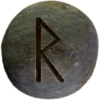
The rune Raido (ᚱ) represents movement, journey, and the shaping of paths, which aligns with Kára’s constant motion as she flies above battlefields and influences outcomes. This rune emphasizes direction and purposeful travel, reflecting how her actions guide the flow of events in dynamic ways. Raido (ᚱ) captures the sense of momentum and change that defines her presence.
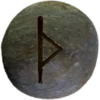
Thurisaz (ᚦ) symbolizes force, conflict, and raw power, which mirrors the storm-like intensity that surrounds Kára during moments of battle. This rune highlights both destructive potential and the strength required to confront chaos directly. Together, Raido (ᚱ) and Thurisaz (ᚦ) express the balance between movement and force that shapes her role within these narratives.
Importance of Kára to Asatruar
Kára holds significance for Asatruar as a symbol of powerful transformation and the complex nature of loyalty within challenging circumstances. Her story encourages reflection on how strength and vulnerability often exist together, especially when individuals engage with forces that exceed ordinary control. Through her actions, she demonstrates the impact of intention and the consequences that can arise even from support and devotion.
Practitioners often view her as a reminder to approach challenges with awareness and respect for unpredictable outcomes. Her connection to storms and battle reinforces the importance of adaptability and inner resilience when facing intense situations. This perspective allows her story to continue shaping spiritual reflection and personal understanding.