
Last Updated on April 25, 2026
Table of Contents
Dröfn: The Foaming Crest of the Sea
Dröfn, also written as Drofn or Drǫfn, stands among the named daughters of Ægir and Rán, where each figure expresses a distinct movement and texture of ocean waves. You can pronounce Dröfn as “DRUHFN,” where the letter ö sounds like the “u” in “burn,” and the cluster “fn” closes the word with a compact and rounded finish. The alternate form Drǫfn includes the letter ǫ, pronounced as a short “aw,” giving it a slightly deeper and more open tone. These variations preserve older phonetic patterns while maintaining a consistent identity across different traditions.
The name Dröfn connects closely to the idea of foam or the frothy crest that forms when waves rise and break along the surface. This association places her within the most visible and expressive part of ocean movement, where energy transforms into texture and detail. Her identity captures the moment when water churns and creates intricate patterns that shift constantly with wind and motion. This connection makes her a vivid representation of the sea’s surface complexity rather than its deeper currents.
Dröfn functions within a collective of wave maidens, yet her specific focus on foam distinguishes her role within that shared identity. Each sister contributes a different quality, and Dröfn’s presence highlights the fine details that emerge during active movement. This specialization allows the group to represent a wide range of ocean behavior, from smooth swells to breaking crests. Her role reinforces the idea that even small visual elements carry meaning within the broader system of the sea.
Texture and Visual Detail
Dröfn’s association with foam emphasizes the importance of texture in understanding the sea, where the surface reveals subtle changes through shifting patterns and formations. These details provide valuable information about wind strength, current direction, and underlying movement, making them essential for observation and navigation. Her identity reflects this connection, turning visual cues into meaningful expressions of natural forces. This perspective bridges the gap between aesthetic appreciation and practical awareness.
The pronunciation of her name reinforces this sense of texture, as the rounded vowel and compact ending create a sound that feels contained yet dynamic. This linguistic quality mirrors the physical behavior of foam, which forms quickly and dissolves just as rapidly within the motion of waves. The preservation of this sound across variations ensures that her identity remains closely tied to the concept she represents. This alignment between sound and meaning strengthens her role within the group.
Alternate spellings such as Drofn and Drǫfn maintain the same phonetic core, allowing the name to adapt across regions while preserving its essential character. These forms do not introduce significant changes, which helps maintain consistency in how she is recognized and understood. This stability ensures that her association with foaming crests remains clear regardless of linguistic context. Such continuity supports her place as a reliable symbol of surface detail.
Presence in Early Texts
Dröfn appears in the Prose Edda, where lists of Ægir and Rán’s daughters include her among the figures representing different aspects of wave behavior. These references provide a structured framework for understanding the sea’s complexity through identifiable names and roles. While the texts do not expand into detailed narratives about her individual actions, they establish her position within the collective group. This inclusion ensures that her contribution to the depiction of ocean movement remains recognized.
The presentation of Dröfn within these works highlights the importance of categorizing natural phenomena in ways that make them accessible and meaningful. By assigning names to specific features such as foam, the texts create a system that connects observation with storytelling. Her presence adds depth to this system by representing a distinct and recognizable element of wave activity. This approach allows readers to engage with the sea as a layered and expressive environment.
Runes Reflecting Dröfn’s Nature
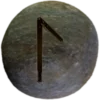
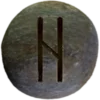
The rune Laguz (ᛚ) aligns strongly with Dröfn, as it represents water, flow, and the continuous movement that shapes the surface of the sea. Its symbolism captures the essence of her foaming crests, where energy transforms into visible patterns that shift and dissolve. Another rune, Hagalaz (ᚺ), reflects disruption and sudden change, which connects to the breaking action that produces foam and texture along wave tops. Together, these runes illustrate the interplay between fluid motion and abrupt transformation, highlighting how surface detail emerges from dynamic forces.
Dröfn’s Importance to Asatruar
Dröfn holds importance for Asatruar because she represents the subtle details that reveal larger patterns within natural systems. Her association with foam encourages awareness of how small changes can signal broader shifts in conditions and direction. Practitioners often find meaning in her connection to observation, where careful attention uncovers deeper understanding. This perspective fosters mindfulness and sensitivity to the environment.
Her role also highlights the value of recognizing transient moments, as foam appears briefly yet carries important information about movement and energy. This understanding extends into spiritual practice, where fleeting experiences can hold lasting significance. Dröfn’s presence reinforces the idea that detail and change remain interconnected, shaping both perception and response. She becomes a symbol of awareness, transformation, and the expressive surface of natural forces.