Last Updated on April 25, 2026
Table of Contents

Rán: Mistress of the Sea’s Hidden Depths
Rán, also written as Ran or occasionally Ránn, emerges as a powerful figure connected to the sea’s depths and the unseen forces that move beneath the surface of ocean waters. You can pronounce Rán as “rawn,” where the accented á carries a long “aw” sound that gives the name a broad and resonant tone. This diacritical mark signals a shift in vowel length, which shapes the rhythm and presence of the word in spoken form. Alternate spellings such as Ran simplify the pronunciation while maintaining the same core identity across different texts.
Rán holds a distinctive role as the wife of Ægir, sharing dominion over the sea while embodying a more ominous and grasping aspect of its nature. She does not simply represent water itself, as her character emphasizes the act of pulling and taking, particularly through her well-known net. This net captures those who venture too far or fall into danger, reflecting the unpredictable and often unforgiving nature of the ocean. Her presence reminds listeners that the sea offers no guarantees, even to those who approach it with respect.
Her partnership with Ægir creates a balanced portrayal of oceanic forces, where hospitality and danger exist side by side within the same domain. While Ægir hosts gatherings and provides a setting for interaction, Rán represents the underlying risk that always accompanies life near or on the water. This dynamic illustrates how natural forces contain both inviting and threatening elements that cannot be separated. Together, they create a complete image of the sea as a living presence with shifting moods and intentions.
The Net and the Nature of Loss
Rán’s net stands as one of her most defining symbols, representing both physical capture and the broader concept of loss associated with the sea. Sailors who disappear beneath the waves become part of her domain, reinforcing the idea that the ocean claims what it takes without explanation or return. This imagery connects deeply with communities that rely on maritime travel, where the risk of sudden loss remains ever present. Her net therefore becomes more than a tool, as it embodies the boundary between life and the unknown depths.
Stories often portray Rán as a figure who does not negotiate or release what she has taken, emphasizing the finality of her actions and the permanence of the sea’s claim. This aspect of her character adds a layer of gravity to her presence, as it highlights the consequences of venturing into unpredictable environments. Her role does not center on malice, yet it conveys an unyielding force that operates according to its own nature. This portrayal reinforces the importance of awareness and respect when interacting with powerful natural elements.
Alternate forms such as Ran and Ránn appear across sources, reflecting shifts in spelling that arise from linguistic adaptation over time. These variations maintain the same essential identity while offering slightly different phonetic expressions. The consistent use of her name ensures that her role remains recognizable even as language evolves. This continuity strengthens her place within narratives that explore the relationship between people and the sea.
Presence in Early Texts
Rán appears in the Prose Edda and Poetic Edda, where references describe her net and her connection to those who perish at sea. These accounts often mention offerings made to her by sailors who seek safe passage, reflecting an awareness of her influence over maritime fate. Her inclusion within these works provides a glimpse into how communities understood and responded to the dangers of ocean travel. This portrayal ensures that her character remains closely tied to real experiences shaped by the sea.
These texts present Rán as an integral part of the ocean’s identity, emphasizing her role alongside Ægir and their daughters, who represent the waves. Her presence adds depth to the depiction of the sea, transforming it from a simple setting into a complex and active force. By including her within these narratives, the authors highlight the multifaceted nature of water and its impact on human life. This approach allows readers to engage with the sea as both a physical and symbolic presence.
Runes Reflecting Rán’s Power
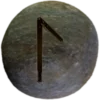
The rune Laguz (ᛚ) connects strongly with Rán, as it represents water, intuition, and the deep currents that shape unseen movement beneath the surface. Its symbolism aligns with her role in governing the hidden aspects of the sea, where forces operate beyond immediate perception. Another rune, Hagalaz (ᚺ), represents disruption, sudden change, and the uncontrollable events that alter the course of life, reflecting the unpredictable nature of the ocean and Rán’s influence. Together, these runes capture both the fluid depth and the abrupt force that define her presence, illustrating how unseen currents and sudden shifts shape outcomes.
Rán’s Importance to Asatruar
Rán holds importance for Asatruar because she represents the reality of loss and the need to respect forces that exist beyond human control. Her character encourages awareness of the balance between reliance on natural resources and the risks that accompany them. Practitioners often see in her a reminder that life includes elements that cannot be negotiated or avoided. This understanding fosters a sense of humility and attentiveness within spiritual practice.
Her role also highlights the importance of acknowledging boundaries, particularly when engaging with powerful environments that demand caution and respect. Rán’s presence reinforces the idea that not all outcomes can be shaped through intention or effort. This perspective encourages reflection on acceptance and resilience in the face of uncertainty. She becomes a symbol of the sea’s depth, its unpredictability, and the enduring need for respect toward forces that shape existence.