Last Updated on April 11, 2026
Table of Contents
The Nourishing Presence of Auðhumla and Her Primordial Role
Auðhumla, sometimes written as Audhumla or Audhumbla in simplified forms, carries a name from Old Norse pronounced roughly as “OYTH-hoom-lah,” where the letter ð sounds like the soft “th” in “this.” This primeval cow represents nourishment, sustenance, and the quiet force that supports life during its earliest stages. Her presence reflects a steady and reliable source of energy that allows growth and development to begin and continue.
Auðhumla emerges in a cold and harsh environment, where she provides sustenance through her milk, feeding the giant Ymir and supporting his continued existence. This act of nourishment highlights her essential role in maintaining life within challenging conditions. Rather than acting through force or conflict, she contributes through steady support and provision, showing a different form of influence.
Her connection to salt and ice further emphasizes her relationship with the environment, as she licks salty rime stones and draws sustenance from them. This action reflects adaptation and the ability to draw value from limited resources. Through this behavior, Auðhumla embodies resilience and the capacity to sustain life even in difficult surroundings.
Accounts in Early Texts and Narrative Role
The Prose Edda includes a clear description of Auðhumla and her role in early creation narratives, presenting her as a vital source of nourishment and transformation. The text explains how she feeds Ymir with her milk, ensuring his survival and growth during a formative period. This relationship establishes her as a central figure in sustaining life at a crucial moment.
As Auðhumla licks the salty ice, she gradually reveals the figure of Búri, pronounced “BOO-ree,” who becomes an important ancestor of the gods. This process highlights her role not only as a provider of nourishment but also as an agent of uncovering and emergence. Through her actions, she contributes directly to the unfolding of significant events and lineages.
This narrative emphasizes her steady and consistent influence, showing that creation and development often depend on ongoing support rather than sudden action. Her presence within these accounts reinforces the idea that nourishment and persistence play essential roles in shaping outcomes. Through these contributions, Auðhumla gains lasting significance.
Symbolism and Continuing Meaning
Auðhumla represents nourishment and the sustaining force that allows life to develop and continue over time, emphasizing the importance of steady support in any process of growth. Her actions illustrate how simple, consistent effort can produce meaningful results, especially when conditions remain difficult. This symbolism encourages an appreciation for the quiet contributions that often go unnoticed.
The act of licking ice to reveal hidden forms reflects the idea of uncovering potential through patience and persistence, showing that valuable outcomes often require time and repeated effort. This perspective highlights the connection between endurance and discovery, reinforcing the importance of ongoing engagement. Through this lens, Auðhumla becomes a symbol of gradual transformation.
Modern interpretations continue to view Auðhumla as a representation of care, sustenance, and the forces that support life from its earliest stages. Her image resonates with those who value stability, nourishment, and the ability to maintain progress through consistent effort. By embodying these qualities, Auðhumla remains a meaningful figure associated with growth and support.
Runes Reflecting Nourishment and Emergence
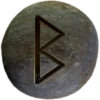
The rune Berkanan (ᛒ), pronounced “BEHR-kah-nanh,” connects closely with Auðhumla through its association with growth, fertility, and nurturing energy that supports development. This rune reflects the steady nourishment she provides, emphasizing the importance of care and support in allowing life to flourish. Its meaning aligns with her role as a source of sustenance and protection.
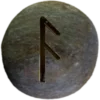
Another rune, Ansuz (ᚨ), pronounced “AHN-sooz,” represents communication, breath, and the emergence of awareness, linking it to the uncovering of Búri through Auðhumla’s actions. This rune highlights the transition from hidden potential to visible form, reinforcing the idea of revelation through persistent effort. Together, Berkanan (ᛒ) and Ansuz (ᚨ) illustrate how Auðhumla embodies both nourishment and the unfolding of new existence.
Importance of Auðhumla Within Asatruar Practice
Within modern Heathen traditions, Auðhumla holds importance as a symbol of nourishment, care, and the sustaining forces that support life and development. She represents the idea that growth depends on consistent support and attention, encouraging individuals to value steady effort in their own lives. This perspective fosters an appreciation for the processes that maintain balance and well being.
Practitioners often view Auðhumla as a reminder that even simple actions can lead to significant outcomes when carried out with persistence and intention. Her role in revealing hidden forms highlights the importance of patience and dedication in uncovering potential. This connection encourages a thoughtful approach to personal growth and development.
Auðhumla also symbolizes resilience, showing how life can continue and thrive even in challenging environments when supported by reliable sources of nourishment. This idea reinforces the value of adaptability and care in maintaining stability. Through these meanings, Auðhumla remains a meaningful and influential figure within contemporary spiritual practice.