Last Updated on April 25, 2026
Table of Contents

Dúfa: The Deep Surge Beneath the Waves
Dúfa, also written as Dufa or occasionally Dúfa without accent marks in simplified forms, appears among the daughters of Ægir and Rán, where each figure represents a distinct motion within the sea’s layered behavior. You can pronounce Dúfa as “DOO-fah,” where the accented ú carries a long “oo” sound that gives the name a smooth and extended quality. This vowel length shapes the rhythm of the word, allowing it to echo the steady movement it represents. Alternate spellings retain the same structure, ensuring that pronunciation remains consistent even when diacritical marks disappear.
The name Dúfa connects closely to the idea of a dipping or rolling motion within water, suggesting a deeper surge that moves beneath the surface rather than forming visible crests. This association places her within the hidden layers of ocean activity, where energy travels quietly yet powerfully through shifting currents. Her identity captures a form of motion that does not demand attention through height or foam, yet still influences the overall behavior of the sea. This connection highlights how unseen forces shape visible outcomes.
Dúfa functions as part of a collective group of wave maidens, yet her role emphasizes depth and internal movement within that shared identity. Each sister embodies a different aspect of water’s behavior, and Dúfa’s presence brings attention to the quieter processes that sustain continuous motion. This specialization allows the group to represent a complete system, where surface activity depends on underlying shifts. Her role reinforces the idea that subtle forces carry equal importance within natural patterns.
Subsurface Motion and Meaning
Dúfa’s association with dipping movement reflects the subtle rise and fall that occurs beneath visible waves, where energy transfers across layers of water without dramatic display. This motion plays a crucial role in shaping how waves form and travel, making it an essential part of ocean dynamics. Her identity therefore connects to processes that remain hidden yet fundamental, offering insight into how the sea operates as a unified system. This perspective encourages attention to what lies beneath immediate perception.
The pronunciation of her name supports this concept, as the elongated vowel creates a sense of continuity and flow that mirrors the steady movement she represents. This sound pattern allows the name to carry a calm and measured tone, reinforcing her connection to deeper currents rather than surface turbulence. The preservation of this phonetic quality across variations ensures that her identity remains closely tied to the idea of sustained motion. This alignment between sound and meaning strengthens her role within the group.
Alternate spellings such as Dufa maintain the same phonetic structure while adapting to different linguistic contexts, allowing her name to remain accessible without losing its core identity. These variations do not introduce significant changes, which helps maintain clarity in how she is recognized and understood. This stability ensures that her association with subsurface movement remains consistent across interpretations. Such continuity supports her place as a reliable representation of hidden motion.
Presence in Early Texts
Dúfa appears in the Prose Edda, where lists of Ægir and Rán’s daughters include her among the figures representing various aspects of wave behavior. These references provide a structured framework that connects individual names to specific movements within the sea. While the texts do not expand into detailed narratives about her actions, they establish her role within the collective group. This inclusion ensures that her contribution to the depiction of ocean dynamics remains recognized.
The presentation of Dúfa within these works highlights the importance of understanding natural phenomena through categorized forms that reflect observation and experience. By naming different types of movement, the texts create a system that links storytelling with environmental awareness. Her presence adds depth to this system by representing the quieter, underlying aspects of wave activity. This approach allows readers to engage with the sea as a layered and interconnected environment.
Runes Reflecting Dúfa’s Depth
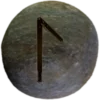
The rune Laguz (ᛚ) aligns closely with Dúfa, as it represents water, flow, and the continuous movement that defines both surface and subsurface activity. Its symbolism captures the essence of her role, where energy travels through unseen layers to shape the behavior of waves above. Another rune, Ūruz (ᚢ), reflects raw strength and foundational force, which connects to the steady power that drives deeper currents. Together, these runes illustrate the balance between visible motion and hidden influence, highlighting how underlying strength supports outward expression.
Dúfa’s Importance to Asatruar
Dúfa holds importance for Asatruar because she represents the unseen forces that influence both environment and personal experience, encouraging awareness of what operates beneath the surface. Her role highlights the value of looking beyond immediate appearances to understand deeper patterns and connections. Practitioners often find meaning in her association with steady movement, where change occurs gradually yet consistently over time. This perspective fosters patience and attentiveness within spiritual practice.
Her connection to subsurface motion also emphasizes the importance of inner development, where growth often takes place quietly before becoming visible. This understanding encourages reflection on how internal processes shape external outcomes. Dúfa’s presence reinforces the idea that depth and subtlety carry significant influence within both natural and personal systems. She becomes a symbol of hidden strength, continuity, and the quiet forces that guide transformation.